
GEO : The Complete Guide to AI Search

Written by Raouf Douihech
SEO, GEO/AEO & Marketing Consultant · July 24, 2026
You type your question into ChatGPT. It answers in three paragraphs, cites four sources, and you never click a single blue link. Hundreds of millions of people repeat that gesture every day. For your brand, it rewrites a rule that held for twenty-five years: your visibility is no longer decided by your position on Google, but by your presence inside the AI's answer.
This discipline has a name: GEO, for generative engine optimization. Some call it AEO (answer engine optimization) or AI SEO (or LLM SEO). It is the work of getting ChatGPT, Google AI Overviews, Perplexity, Claude and Gemini to cite and recommend your brand when someone asks them about your topic.
This guide is the compilation of everything I have gathered on the subject: my own research, my training, the studies I dug into all the way to their primary source, my tests and my analyses.
In other words, the state of what we actually know about GEO today. It is written as much for the SEO who wants a method as for the founder or CMO who has to decide where to invest: every concept is explained, quantified, illustrated, then turned into concrete actions.
One honest warning before we start: this field is not stable. The platforms change their mechanics constantly, and studies land every week that refine or contradict the previous ones.
That is why I update this guide every week: new studies, refreshed statistics, revised tactics. Last updated: July 2026.
The short version (for the impatient)
GEO optimizes your visibility inside the answers of generative AI. It does not replace SEO, it is built on top of it.
Three shifts: you optimize for prompts (not keywords), you aim for citation and recommendation (not a ranking position), and the playing field becomes the whole web (not just your site).
AI systems break every question into sub-queries (the query fan-out): you have to cover a topic in full, not a single keyword.
Each platform draws from its own pool of sources: 86% of the most-cited sources are not shared between ChatGPT, Perplexity and Google (Ahrefs, 2025). ChatGPT draws from Bing, Claude from Brave, Google from its own index.
What gets you cited: consensus across sources, freshness, authority, and the right format (listicles carry a lot of weight).
Half the work happens off your site: brand mentions are the number-one signal, ahead of backlinks.
AI traffic is small in volume but highly qualified: the AI has already sold your brand before the click.
GEO, AEO, LLM SEO: definitions and how they differ from SEO
GEO (generative engine optimization) is the set of techniques that make your content visible, cited and recommended inside the answers of generative search engines. Where SEO aims for a position in Google's list of links, GEO aims for a place inside the answer itself.
Why that distinction matters for your business: when a prospect asks ChatGPT "which tool should I pick for X" and the answer names three competitors but not you, you lost the sale before it began. There is no page two in an AI answer. GEO is the discipline that works to be in that answer.
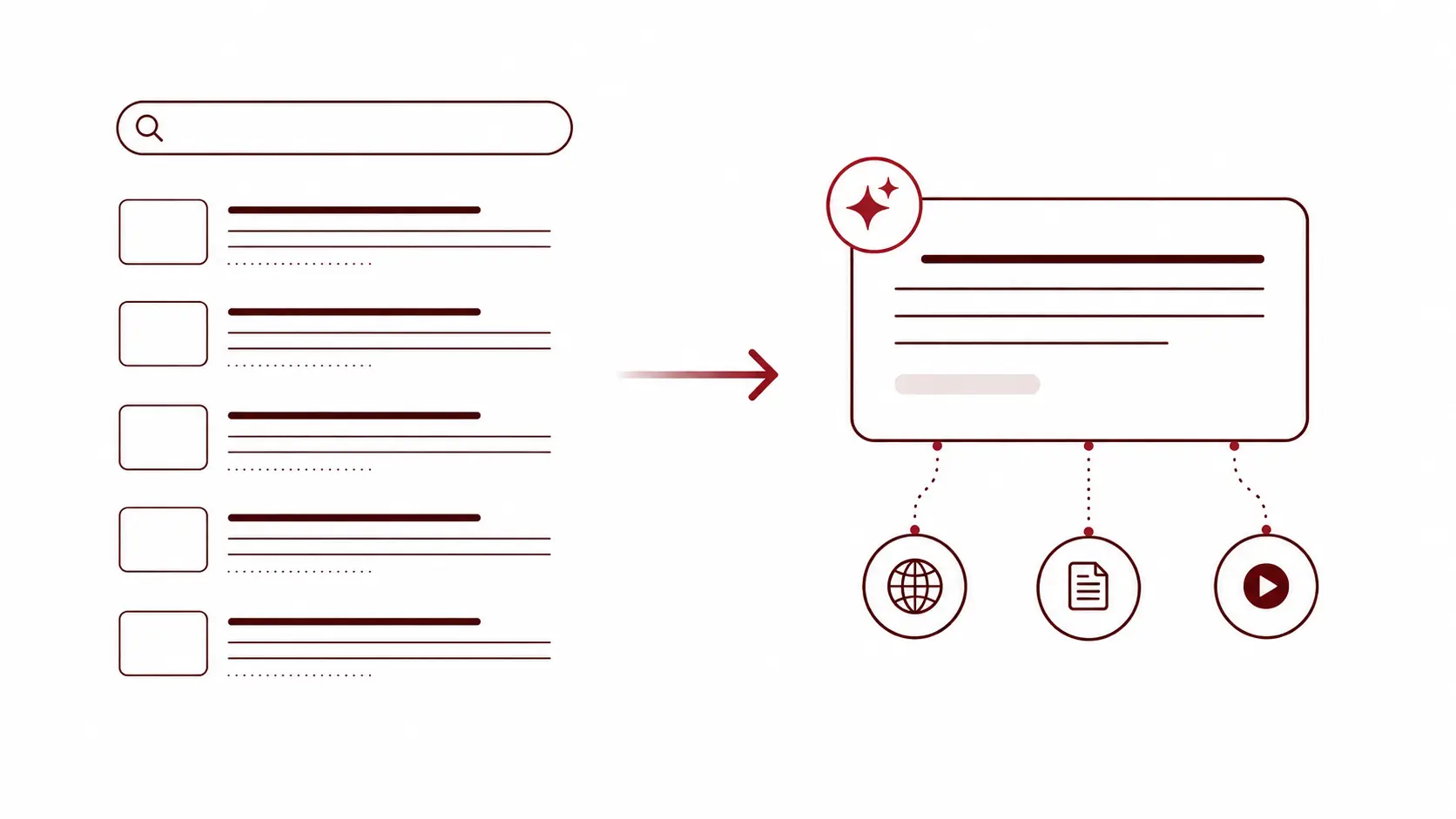
GEO, AEO, LLMO, AIO: what each acronym covers
You will run into a whole soup of acronyms for neighboring ideas: GEO, AEO, AI SEO, LLM SEO, LLMO, GSO, AIO. Knowing what each one covers keeps you from being spun by the snake-oil sellers, and lets your team speak the same language.
GEO (generative engine optimization): the most common term. It targets the generative engines, the ones that write an answer: ChatGPT, Perplexity, Google AI Overviews and AI Mode, Claude, Gemini.
AEO (answer engine optimization): broader. AEO covers every direct-answer engine, including Google's featured snippets and voice assistants, which existed before generative AI. The practical difference between AEO and GEO: AEO is about being the answer, GEO is about being cited inside a generated answer. In day-to-day work the two overlap so much that most people use them interchangeably.
AI SEO / SEO for AI / AI search optimization: the plain-English umbrella terms for the same work, doing SEO for AI search engines instead of the ten blue links.
LLMO or LLM SEO: optimization aimed at the large language models (the technology behind these assistants), and increasingly at "SEO for LLMs" specifically. Same fight as GEO, from a more technical angle.
GSO (generative search optimization) and AIO (AI optimization): more synonyms for GEO, seen mostly since 2026. You will even meet SGE-era leftovers ("SEO vs SGE"); treat them as the same discipline under a new label.
My advice: do not get lost in the vocabulary. GEO, AEO, AI SEO, LLM SEO and the rest all describe the same battle, being the source the AI uses to build its answer. Throughout this guide I use GEO, and the principles hold for every acronym.
SEO vs GEO: the 3 shifts, and what each one changes for you
So what is the real difference between GEO and traditional SEO?
GEO vs SEO is not a matter of GEO replacing SEO, and GEO is not just "SEO with a new name" either. Three things change in nature between the two, and each one has a direct business consequence.
Classic SEO | GEO | What it changes for you | |
|---|---|---|---|
What you optimize | Keywords ("accounting software") | Prompts: full questions, with context and intent ("which accounting software for a 5-person firm that invoices clients in both the US and the EU?") | A single topic spawns hundreds of phrasings: you can no longer target one expression, you build authority over an entire subject |
What you aim for | A position (the top 3) | A citation or a recommendation inside the answer | There is no fixed rank: citations vary from one answer to the next, you measure a frequency of appearance, not a slot |
The playing field | Mostly your pages | The whole web: what Reddit, YouTube, reviews, the press and comparison articles say about you | Your reputation becomes a technical lever: part of your visibility plays out on pages you do not control |
Take a concrete example.
A mid-sized company selling inventory-management software has spent years investing to rank for "inventory management software."
In SEO, its product page at position 2 catches clicks every day.
In GEO, the question becomes: when a founder asks ChatGPT "which inventory management software for an online retailer running 3 warehouses?", does the answer name it?
And that answer depends as much on third-party comparisons, reviews and Reddit threads as on its own page.
SEO is not dead, it becomes the foundation
GEO does not replace SEO: it stacks on top of it. The fundamentals (quality content, topical authority, clean architecture, crawlability) serve both disciplines.
And ranking on the classic engines is still a direct door into the AIs, because most of them draw from the indexes of existing engines to build their answers. We will see below that ChatGPT leans on Bing and Claude on Brave: your SEO literally feeds their raw material.
Google says as much, plainly. In its official guide on optimizing for its AI features, the company states that optimizing for generative AI search "is optimizing for the search experience, so it is still SEO." Translation: no separate magic formula, just the bar for quality raised a notch.
The real user journey confirms that complementarity. Consultant Eli Schwartz notes that AI integrates into search more than it replaces it (July 2026): many users discover a brand through an AI, then double-check on Google before buying.
If the AI recommends you but your Google presence is weak, you lose at the verification step. The two forms of visibility validate each other.
One point of honesty, because you read all sorts of nonsense: GEO does not improve your Google ranking. These are two distinct mechanics that share a foundation of quality. Be wary of anyone selling you the opposite.
Why now: the 2026 landscape in numbers
GEO is no longer a futurist's bet. Usage has shifted, and the 2026 figures show it.
ChatGPT crossed one billion monthly active users in May 2026 and remains the leading AI platform, even as Gemini and Copilot chip away at its share (Similarweb, January 2026). An audience the size of a search engine, asking its questions in natural language.
Google's AI Overviews (those generated answers shown above the results) cover a growing share of queries. Their effect is measured: according to an Ahrefs study (2026), when an AI Overview appears, clicks to the top classic result drop by 58%. Even perfectly ranked, you lose more than one click in two when the answer is self-sufficient.
The topic now has its industrial-scale measurement apparatus: Semrush analyzed 126 million prompts for its 2026 AI visibility index. When the tool platforms invest at that scale, it is because their customers have already made the shift.
The consequence for a decision-maker: every AI answer that satisfies the user is a click your site no longer receives. The question is no longer "should we get into this," but "how many conversations are already happening without us."
🎯 What this changes for you. The reflex to install right now: stop steering your visibility by ranking and traffic alone. Those two metrics simply do not see the conversations where the AI talks about you, or ignores you.
Do this now | Why | Effort |
|---|---|---|
Spend 30 minutes with your team (or your agency) to set the vocabulary: GEO, prompt, citation, mention, AI share of voice. Align on what you now measure: frequency of appearance in answers, not position | Without a shared language, everyone keeps steering by ranking and no one sees the traffic lost inside AI answers; it is the number-one cause of off-target decisions on this topic | Low |
Test 5 questions your customers ask, yourself, on ChatGPT and Google: note whether the answer names you, who it names, and where the cited sources come from | Nothing convinces leadership faster than seeing the answer recommend three competitors; it is your first AI-visibility snapshot, free, in 15 minutes | Low |
Reset traffic expectations with your leadership or your clients: AI will send few visits, but visits that are already convinced (the numbers are in the measurement chapter) | Judging GEO by traffic volume leads to dropping it by mistake; its value is in the quality of the visits and the brand impressions inside conversations | Low |
How AI search works: LLMs, RAG and query fan-out
You cannot optimize what you do not understand. This chapter explains, without needless jargon, how an AI builds its answer and picks its sources. It is the foundation of every tactic that follows: if you read only one theory chapter, read this one.
Two doors in: the model's memory and live search
An AI assistant draws on two distinct reservoirs to answer. Understanding the difference is understanding your two entry levers.
First reservoir: the training data. A language model "learns" by reading a giant snapshot of the web, frozen at a given date. What it saw there, it can recall from memory, without searching. A large part of that corpus comes from Common Crawl, a non-profit project that crawls the open web and publishes the result; most of the big models (GPT, Llama, Claude) feed on it.
Common Crawl's own formula sums up the stakes: "if you are not in the crawl, you are not in the model." A useful detail: Common Crawl prioritizes domains by their centrality in the web's link graph. In practice, the more you are linked and mentioned, the more often its bot (CCBot) visits you, and the more weight you carry in the memory of future models.
Second reservoir: retrieval, the live search. For anything recent or specific, the AI does not trust its memory: it queries a search index, pulls back pages, reads them, then writes its answer while citing them. This mechanism is called RAG (retrieval-augmented generation).
RAG is structurally biased toward recent and verifiable content: that is its whole point, to correct the model's frozen memory. This is why freshness carries so much weight in GEO, as we will measure in the next chapter.
These two doors reinforce each other: being mentioned everywhere feeds the models' memory, and solid classic SEO feeds their live search. If the inner mechanics of the models interest you (training, embeddings, hallucinations), I devoted a full guide to how LLMs actually work, applied to SEO.
The query fan-out: your question becomes a dozen sub-queries
The query fan-out is the mechanism by which an AI breaks your question into several sub-queries, searches them in parallel, then synthesizes everything into a single answer. It is the most important concept in this guide, because it explains why the old "one page, one keyword" recipes no longer cut it.
The measurements converge on the scale of the phenomenon:
Seer Interactive measures an average of 9 to 11 sub-queries per prompt, with peaks at 28 (2025).
Across 1,000 local queries, Dan Hinckley's analysis finds an average of 6.4: the simpler the question, the less it fans out.
Google's AI Mode can break a query into as many as 16 parallel searches.
Let's illustrate with an example from our own field.
You ask an AI: "how much does an SEO audit cost?"
Behind the scenes, it will generate and search something like: what exactly is an SEO audit, what does it include (technical, content, link building), how long it takes, which tools are used, what separates a $500 audit from a $5,000 one, freelancer or agency, how often to redo it.
A page that only talks about price misses six of the seven doors in. The page that covers the whole becomes citable on each of the sub-queries.
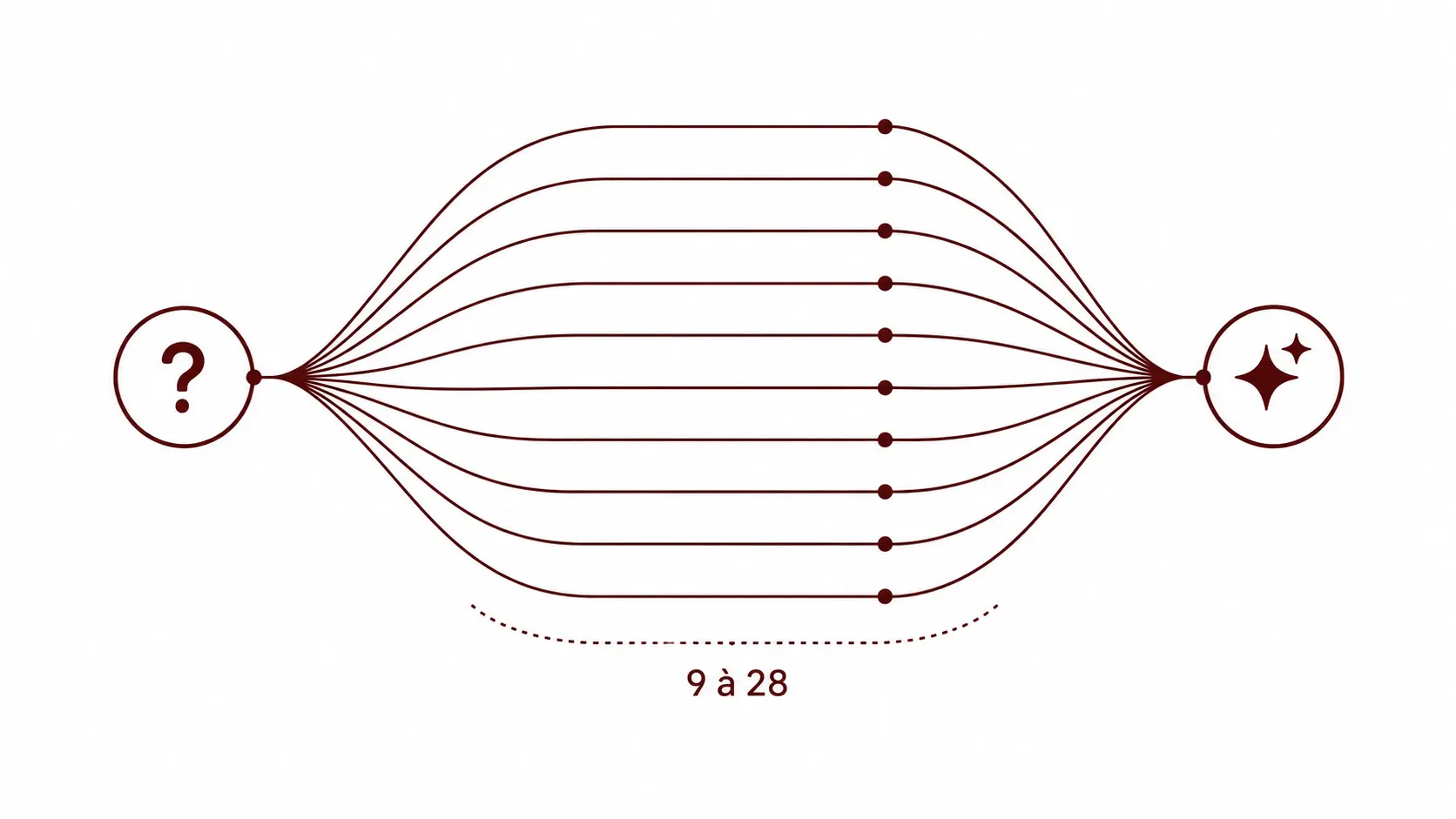
Two features of these sub-queries deserve your attention. First, they are largely synthetic: generated on the spot, different from one session to the next, and most have no measurable search volume; a human would never type them that way.
Second, they are observable: ChatGPT and Perplexity often display the searches they launch, which gives you a direct window onto the angles the AI judges important in your topic. So do not treat them as keywords to target one by one; treat them as the table of contents the AI expects from you.
Probabilistic citations: why "position" no longer exists
The last piece of the puzzle, and it throws every SEO veteran: an AI's citations are probabilistic. Ask the same question twice and you get two similar but not identical answers, sometimes with different sources. This is deliberate behavior: a technical parameter (the temperature) introduces variation so that answers stay natural.
The practical consequence is twofold.
On one hand, there is no rank to conquer: being cited once does not guarantee being cited next time; what you influence is a probability of appearance.
On the other hand, a one-off test proves nothing: if you check your visibility on a Tuesday and draw conclusions from that single snapshot, you are wrong in one direction or the other. You measure frequencies across series of tests, and trends over time. In the measurement chapter we will see how to set up that tracking without spending your days on it.
🎯 What this changes for you. Three reflexes follow from this machinery: cover your topics in full (because of fan-out), keep your content fresh and verifiable (because of RAG), and judge your visibility on trends, never on a single test (because of probabilistic citations).
Do this now | Why | Effort |
|---|---|---|
Check your presence in Common Crawl: on index.commoncrawl.org, search your domain in the latest crawl; if you are missing, verify that your robots.txt and your CDN are not excluding CCBot | Common Crawl feeds the training of most large models: being absent from it means being absent from their memory, no matter how good your site is | Low |
Ask ChatGPT 3 business questions and expand the searches it shows while it answers; note the sub-queries in a table | It is the most direct way to see the real fan-out of YOUR topics: those sub-queries are the list of angles your pages must cover to become citable | Low |
For your number-one topic, list every logical sub-question (how, how much, how long, which tools, which mistakes, X or Y) and check the ones your site actually answers | The gap between the two lists is your coverage deficit: every unanswered sub-question is a door you leave open to competitors | Medium |
ChatGPT, AI Overviews, Perplexity, Claude, Gemini: where to optimize first
The first GEO mistake is treating "AI" as one single block. Each platform has its own sources, its own reference index and its own way of citing. Optimizing for just one can leave you completely invisible on the others, and conversely, knowing these differences lets you concentrate your effort where your audience actually is.
The data that forbids a one-size-fits-all strategy: among the top 50 most-mentioned sources, only 7 are shared by Google AI Overviews, ChatGPT and Perplexity (Ahrefs, 2025), meaning 86% of sources are not shared. At the domain level, across 680 million citations analyzed, only 11% are cited by both ChatGPT and Perplexity.
Even inside Google, AI Overviews and AI Mode cite only 13.7% shared sources for the same prompt: two products from the same company, two different citation systems.
Each AI has its own pool: the map of indexes
The concept that simplifies everything: each assistant draws its sources from a pool, most often the index of an existing search engine. Being absent from a platform's pool means not existing for it, whatever your SEO is otherwise. Here is the map, and above all the entry door to each pool.
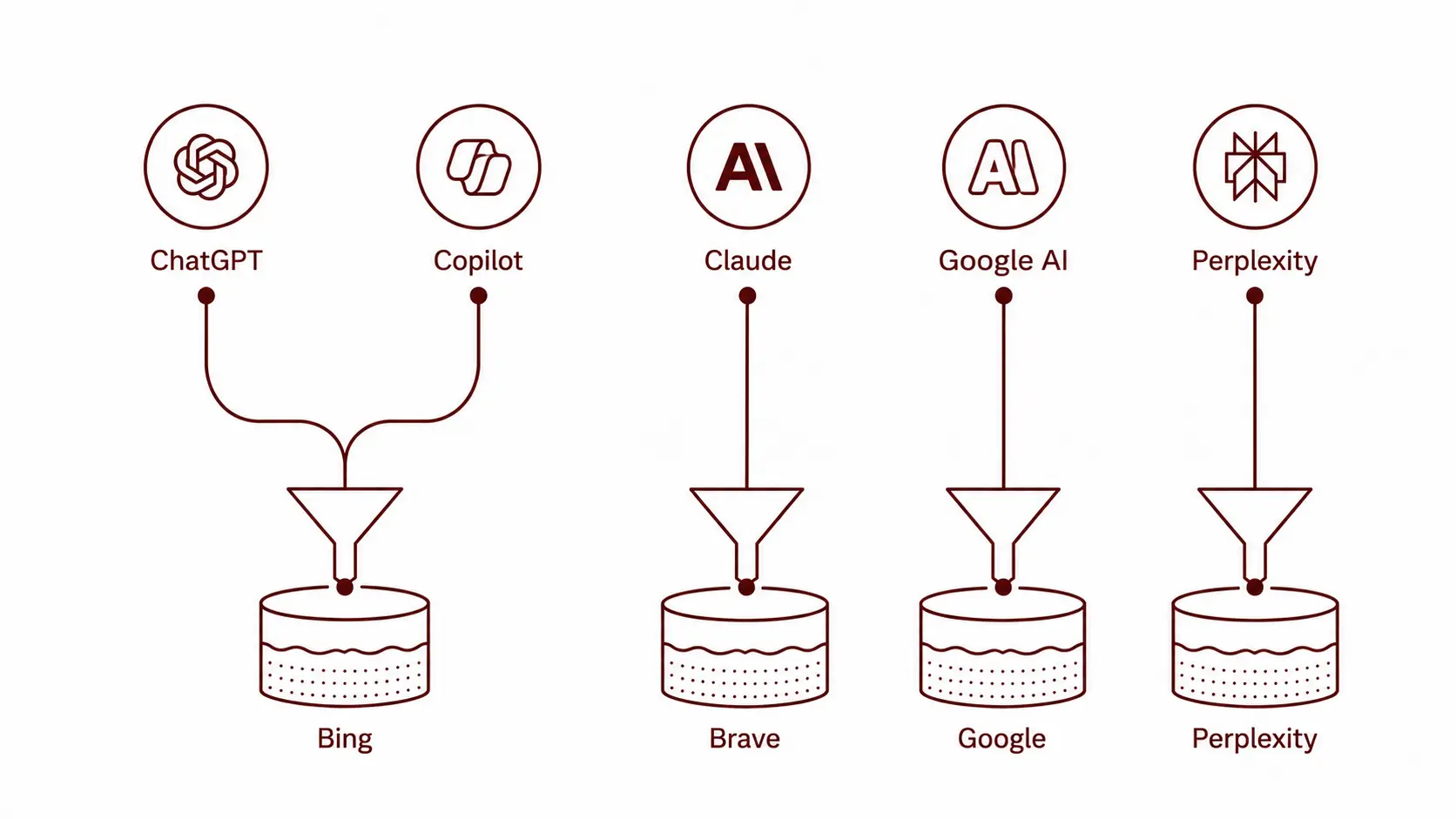
System | Source pool | Your entry door |
|---|---|---|
ChatGPT (web search) | Bing index, supplemented by OpenAI's own crawl | Be indexed and well ranked on Bing: a Bing Webmaster Tools account, submitted sitemap, IndexNow protocol for fast indexing |
Claude | Brave Search index | Check site:yourdomain.com on search.brave.com, submit your key URLs to Brave |
Google AI Overviews / AI Mode | Google index | Healthy Google SEO plus coverage of the sub-questions |
Perplexity | Proprietary index plus on-demand crawl | Allow PerplexityBot, freshness, authority |
Copilot (Microsoft) | Bing index | Same door as ChatGPT: Bing Webmaster Tools |
Look at the middle column: Bing appears twice. It is the most common blind spot among SEOs, who spent twenty years looking only at Google. Being indexed and ranked on Bing conditions your visibility on ChatGPT and Copilot.
The good news: Bing Webmaster Tools is free, submission takes half an hour, and the tool then shows you data Google never will, including indicators on the Copilot surface (more on that in the measurement chapter). If you did only one technical action this week, this would be it.
The Claude case shows just how decisive the pool is: I lived the "first on Google, invisible to Claude" scenario with this very site, and the cause came down to one line, the absence of the Brave index. I documented the full test, the mechanics and the indexing method in my dedicated guide: how to get cited by Claude.
Each platform's citation profile
Beyond the pool, each engine has a "personality": the type of content it prefers to cite, and how generous it is with links. This table cross-references the available studies.
Platform | Preferred sources | Link rate to cited brands | Top lever |
|---|---|---|---|
ChatGPT | Large publishers and licensed media, encyclopedic content, listicles, Reddit | Medium | Proprietary data plus mentions in media and comparisons |
Google AI Overviews | Established sites, Reddit, YouTube, recent and structured content | Lowest: about 10.7% of mentions with a link | Healthy Google SEO plus freshness |
Google AI Mode | Social platforms, YouTube first, Quora | Medium | Video plus discussions |
Perplexity | Google top 10, YouTube, Reddit and Quora | Most generous: about 51.6% of mentions with a link | Google ranking plus communities |
Claude | Top of Brave Search, returned almost as-is | High (systematic citations in web search) | Being indexed and ranked on Brave |
Gemini | Interconnected content hubs, brand sites, multimodal content | Low | Clusters plus multimodal |
The link rates come from Ahrefs' analysis of 31,000 brand mentions (2026): they tell you where a mention has a chance of becoming a visit, and where it will stay a pure brand impression.
These profiles are not consultant impressions: an independent experiment by Ayomide Joseph (June 2026), across 270 queries, measured very different behaviors. Perplexity runs a web search on 100% of queries (4.2 sources cited per answer on average): it verifies everything, all the time. Gemini searches on 74% of queries (2.2 sources), and more than half of its citations point to brand sites: your own product pages count double with it.
ChatGPT searches on only 44% of queries (1.7 sources): the rest of the time it answers from memory, and that memory is built from your mentions in its training corpus.
Two Gemini specifics are worth flagging for anyone targeting that platform.
First, it is the most multimodal: it cross-references text, images, audio and video on the same topic. Turning a key piece of content into a written guide plus visuals plus video gives it more to work with than its competitors.
Second, its user memory: Gemini builds a relationship over time, and your content can become the knowledge base of the personalized assistants (the "Gems") your users create. Being the reference a Gem consults every session beats a one-off citation.
How to choose your 2 priority platforms
You cannot seriously optimize for six platforms at once. Here is the prioritization method, in three steps.
Start from your audience, not from global market share. Google AI and ChatGPT dominate by volume, that is the default pick. But if you sell to developers or technical profiles, Claude and Perplexity weigh far more among your buyers than in the mainstream stats. Ask your customers which assistants they use: the answer will often surprise you.
Check your entry prerequisites for the 2 platforms you keep: Bing indexing for ChatGPT and Copilot, Brave indexing for Claude, SEO health for Google AI. No point producing content for a platform whose pool ignores you.
Allocate effort by profile: video and communities for Perplexity and AI Mode, freshness and structure for AI Overviews, media and comparison mentions for ChatGPT.
🎯 What this changes for you. Before any content plan, ask the pool question: am I even in the indexes my 2 priority platforms draw from? A Bing Webmaster Tools account and a site: check on Brave settle it in an hour, and everything else depends on it.
Do this now | Why | Effort |
|---|---|---|
Create your Bing Webmaster Tools account (2-click import from Search Console), submit your sitemap and enable IndexNow if your CMS offers it | Bing is the pool for ChatGPT and Copilot: being indexed there is the prerequisite to exist in their answers, and the tool then gives you your Copilot citation data | Low |
Type site:yourdomain.com on search.brave.com and count the pages; if the result is empty or thin, submit your key URLs through Brave's form | Brave is the pool for Claude, whose audience is overwhelmingly professional; indexing can happen in 24 hours and literally changes your existence on that platform | Low |
Ask 5 recent customers: "which AI assistants do you use to research professionally?", then pick your 2 priority platforms on that basis | Global market shares hide huge gaps by industry; optimizing for the platform YOUR buyers use beats following the worldwide average | Low |
Why AI cites a page: the 4 visibility patterns
Since there is no position to conquer, the real question becomes: what raises the probability of being cited? Four patterns emerge from every serious study. Understand them, and most of the tactics in this guide become obvious; ignore them, and you optimize blind.
1. Consensus: the AI cites what several sources confirm
An AI tries to minimize its risk of being wrong. When several independent sources (your site, comparisons, Reddit, reviews, YouTube) tell the same story about your brand, citing you becomes "safe" for it.
When the signals contradict each other or exist in only one place, it moves on to the next brand. Consensus is the most underrated mechanism in GEO, precisely because it does not depend on you alone.
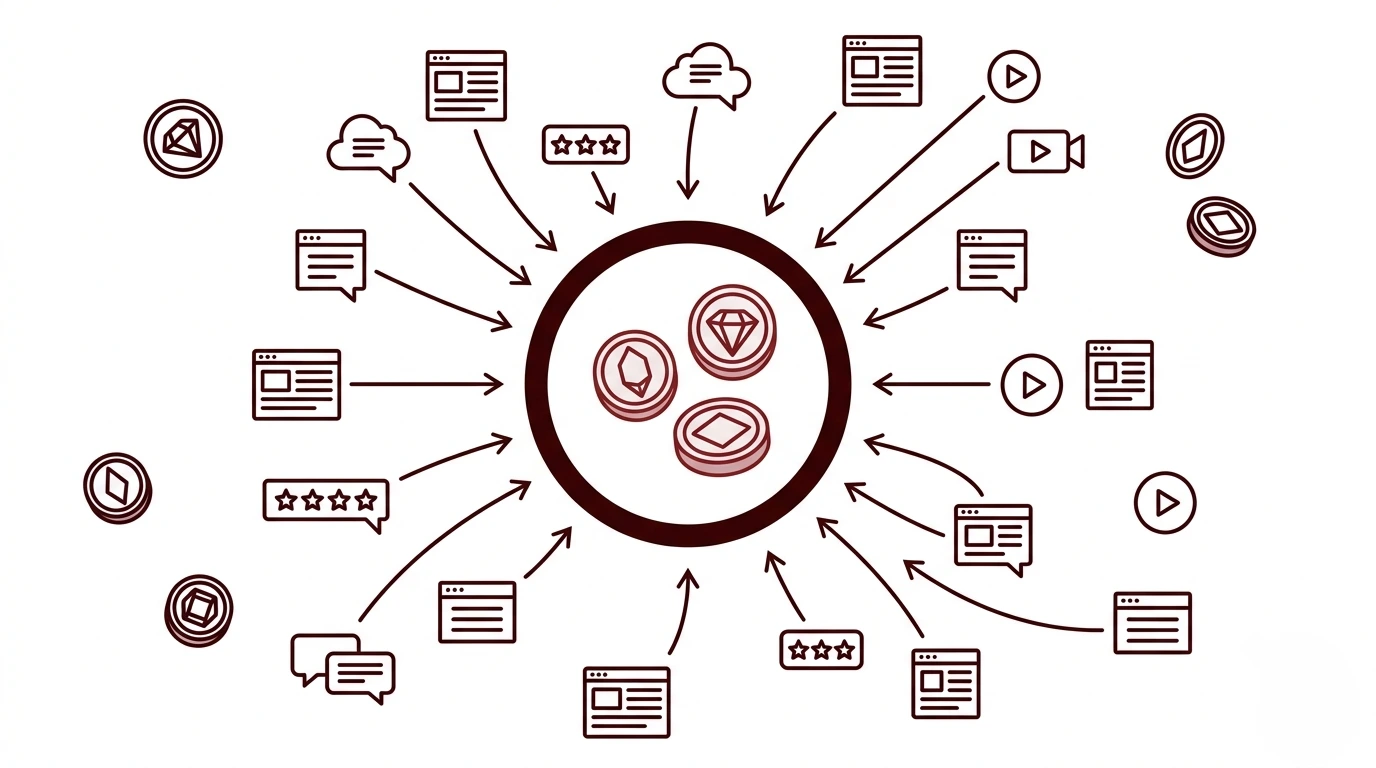
Ayomide Joseph's experiment shows it strikingly: across hundreds of "what is the best alternative to X" queries, the recommendations come from a small, repetitive pool of brands. For the identity management category, Microsoft Entra ID comes out first in 71% of answers, whatever the phrasing. The real fight is not to rank: it is to enter that consensus pool.
The same experiment offers a valuable strategic frame: not all market categories are equally open.
A locked category (one player dominates structurally, like Entra ID at 71%) leaves little room: you play defense or niche.
A led category (a clear leader, around 50%, but a fragmented remainder) leaves challenger slots.
A contested category (the "leader" caps below 50%) is an open window: the author estimates an 18-to-24-month period during which an active challenger can settle into the consensus before the category freezes.
Ask yourself: which situation is yours in?
2. Freshness: the AI prefers the recent, and it measures it
Remember RAG: live search exists to correct the model's frozen memory. So it is wired to prefer the recent. An Ahrefs study of nearly 17 million cited URLs (2025) quantifies it: content cited by AI assistants is on average 25.7% fresher than classic organic results. ChatGPT is the strictest: 76.4% of the time, it cites pages updated in the last 30 days.
Beware the tempting shortcut: changing the publication date without touching the content does not work, the engines detect fake freshness. A real update adds information: refreshed statistics, recent examples, new sections, obsolete passages removed.
This is exactly what I do every week on this guide, and it is one of the arguments in the content chapter for refreshing rather than mass-producing.
3. Authority, but decoupled from Google
Pages that rank well on Google have a better chance of being cited: SEO remains the foundation. But that link is weakening fast, and it is one of the most important shifts to grasp in 2026. Ahrefs measured across 863,000 SERPs (2026) that only 38% of AI Overview citations come from Google's top 10, down from 76% a year earlier. The rest is split between positions 11-100 and beyond position 100.
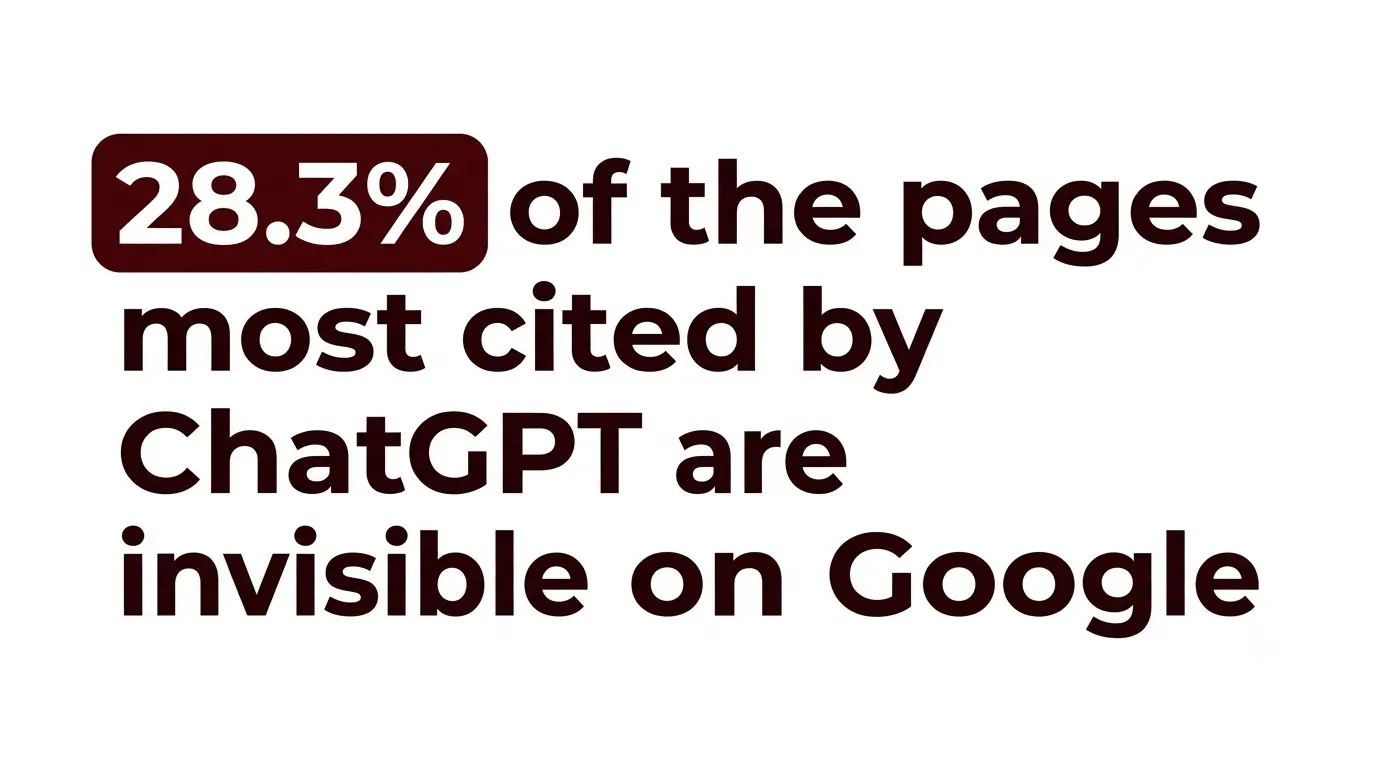
More striking still: 28.3% of the pages most cited by ChatGPT have no organic visibility on Google at all. Nearly a third of the AI-citation champions are invisible in the SEO sense. The lesson: your authority in the eyes of the AIs is built over a wider perimeter than ranking, in particular through the off-site mentions we cover in the off-site chapter. SEO gives you a head start; it no longer gives you a monopoly.
4. Format and information gain
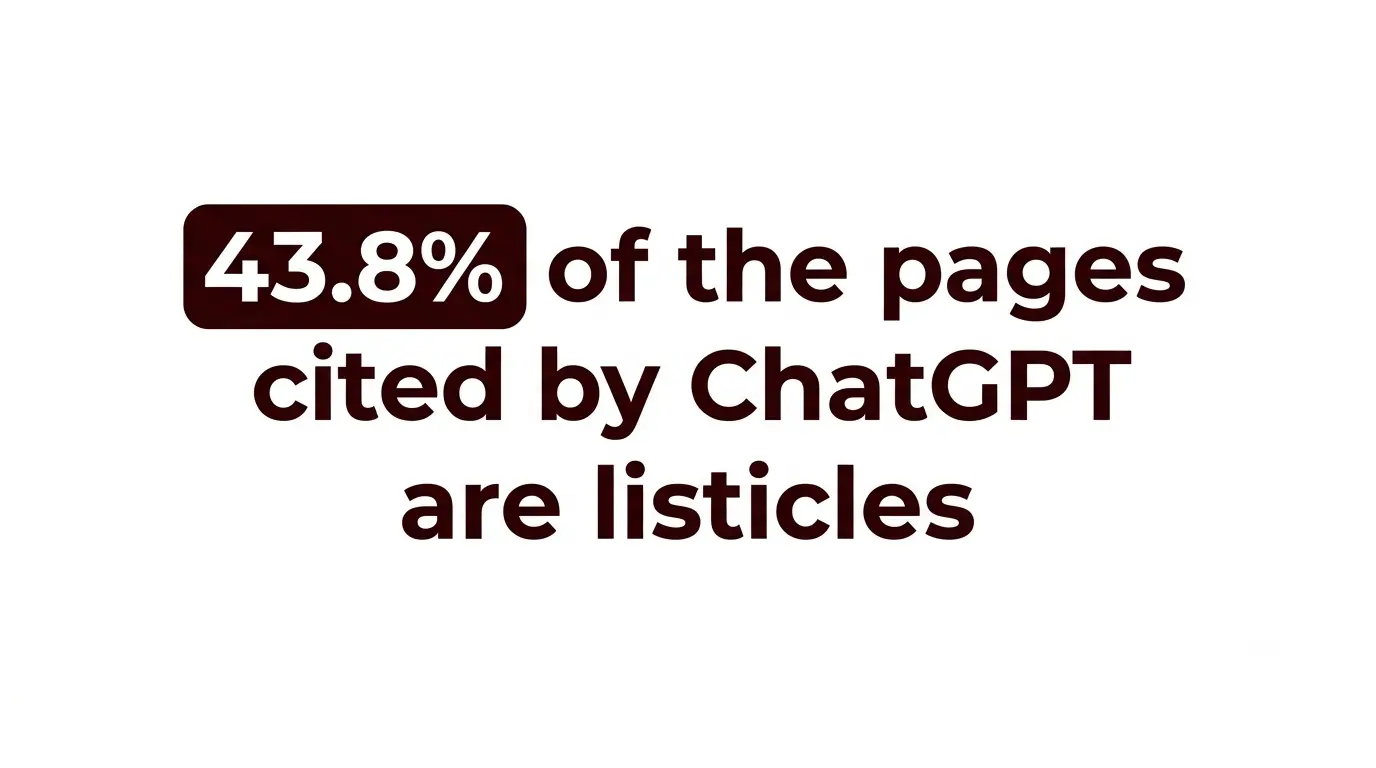
All else being equal, the AI prefers formats it can easily extract an answer from. Listicles ("the 7 best X") are the king format: they make up 43.8% of the pages ChatGPT cites. The reason is mechanical: a listicle compares several options at once, which helps the AI build a recommendation-style answer and establish that famous consensus. Then come "X vs Y" comparisons, detailed reviews and original research.
Length, on the other hand, does not matter: near-zero correlation (0.04) between word count and citation, and 53.4% of cited pages run under 1,000 words. What matters is information gain: the share of your content the model does not already know. Flying V Group measured that the pages winning AI traffic contain markedly less "commodity content" than the pages winning SEO traffic: on explainer content, 32% commodity versus 72%.
The mechanism is ruthless: if your page repeats what the model already knows, it answers from memory and cites no one. Your definition of "what is a CRM" will never earn a citation; your quantified benchmark of 5 CRMs tested over 3 months will.
One last trait of this landscape: it moves constantly. More than 45% of citations change after each AI Overviews refresh, which happens roughly every 2 days. This is why every measurement in this guide is read as a trend: a single day's snapshot means nothing, the trajectory over a quarter says everything.
🎯 What this changes for you. Your four standing worksites flow from these patterns: make what the web says about you converge (consensus), keep your key pages up to date (freshness), build your authority beyond ranking (mentions), and replace commodity content with data only you own (information gain).
Do this now | Why | Effort |
|---|---|---|
Visibly date your strategic content ("updated July 2026") and list what has not moved in over 24 months: those are your refresh priorities | AIs cite content 25.7% fresher than organic, and some measurably penalize pages older than 2 years: dated content is content out of the game | Low |
Qualify your market category: ask "what is the best solution for [your category]" 10 times to 2 AIs, count who comes back; a leader above 70% = locked, around 50% = led, less = contested | Your category's structure dictates your strategy: defend, challenge or charge; in a contested category, the window to settle into the consensus is counted in months, not years | Medium |
Take your most strategic page and highlight everything a model already knows (generic definitions, advice seen everywhere); replace as much as possible with your data, your cases, your numbers | Commodity content triggers no citation: the AI answers from memory; only what you alone know forces it to cite you | Medium |
GEO strategy: AI visibility audit, keywords and prompts
Before you produce anything, diagnose. Most failed GEO strategies start with "let's write content for the AI"; the good ones start by measuring the gap between where your brand should appear and where it actually appears. That audit is called the brand gap analysis, and here is how to run it, step by step.
1. Map your brand entities
An entity, in the vocabulary of the engines, is an identifiable "thing": a brand, a product, a person, a concept. LLMs do not understand your brand name in isolation: they infer what it means from how the web describes it. If the web ties your name to "point-of-sale software for restaurants," that is what the AI will recommend you for, and nothing else.
So start by listing your entities: main brand, sub-brands, product names, proprietary features, visible leaders and experts.
Then, for each, note the topics and attributes you WANT associated with it.
Finally, look at what the web actually says: the adjectives and phrases that recur next to your name in reviews, comparisons, discussions. The gap between the two columns is your first diagnosis.
2. Audit with the 6 visibility gaps
The framework developed by Despina Gavoyannis at Ahrefs splits AI visibility into six dimensions. The value of this grid: each gap calls for a different remedy, which turns a vague "we are not visible" into a precise action plan.
Gap | The symptom | The typical remedy |
|---|---|---|
Visibility | Your brand appears less often than competitors in AI answers | Work every lever, starting with mentions |
Narrative | The AI describes you differently from your positioning (your premium offer framed as "the cheap alternative") | Fix your own messaging everywhere, then the third-party sources that spread the old story |
Topic | You are not associated with a subject you should own (a project management tool never cited for "remote team collaboration") | Create or reinforce the content that ties your entity to that topic, on and off your site |
Format | The AI cites formats (comparisons, videos, guides) you do not produce | Produce in the format that wins, not the one you prefer |
Web mentions | Listicles, reviews and forums cite your competitors but not you | A mention campaign targeted at those exact pages |
Demand | Users search for solutions like yours, your name never appears next to them | Awareness: PR, communities, comparison content |
3. Prioritize: improve, create, influence
You will find more gaps than you can handle. Sort each action into one of three levers: improve an existing page, create missing content, influence a third-party source.
Then attack the quick wins: a page that already ranks but does not cover its whole topic gets fixed in a few hours for a strong impact.
A popular listicle where all your competitors appear except you is a single outreach action to close a major gap.
4. Keyword research, revisited by AI
The base mechanic does not change: seeds (broad topics, 1-2 words) crossed with modifiers (best, how, vs, review, price) in your keyword tool. What changes is the sorting. Two successive filters:
The BID framework, to vet each candidate: Business (if I rank number one for this keyword, does it pay? "what is an ERP" does not have the same value as "best ERP for an industrial SME"); Intent (look at what Google actually ranks: if the SERP is full of product pages, your blog post has no chance, the SERP decides the intent, not you); Difficulty (are sites your size already ranking for it? if the top 10 is all giants, move on).
The AI filter, the new question: "can the AI answer this query fully, without the user needing to click?" The Ahrefs data frames the risk: AI Overviews appear on 21% of all keywords, but 58% of question-form queries, and 99.9% of the keywords that trigger them are informational. Translation: your "what is" and "how to" content will see its clicks melt away; your transactional pages, much less so. Test it yourself: type the keyword, read the AI Overview, and ask honestly whether you would still click.
When the AI absorbs the click, two strategies still win. The first: aim for the mention in the answer rather than the click (this whole guide serves that).
The second: target the AI-resistant keywords, the ones that demand an action rather than information: calculators, simulators, checkers, generators, downloadable templates, free tools.
Not only can the AI not replace them, it recommends them: the Search Engine Land study of 150,000 pages (March 2026) shows that interactive tools get the best LLM citation rates per page, with the assistants recommending them by name. A customs-duty calculator, for a freight forwarder, is both a lead magnet and a citation magnet.
5. Prompt research: building your library
A prompt library is a list of natural-language questions, representative of what your customers ask the AIs, that you track over time to measure your visibility. It is the GEO equivalent of your tracked keyword list. There is no single prompt to optimize (the phrasings are infinite, the fan-out is invisible), but a well-built library gives you a stable sample to measure.
Where to find the raw material: your existing SEO and paid-search keywords (rephrased as full questions), the question queries in Search Console, and above all your customers' real questions: support tickets, sales calls, recurring objections.
Then sort each prompt by intent, following the buying journey: discovery ("how to cut my shipping costs"), education ("how does import customs work"), comparison ("which freight forwarder to pick between X and Y"), purchase ("is X worth the price"), support ("how to set up X").
Where to start? With the comparison prompts, the middle of the journey.
Two reasons, backed by data.
First, these are prompts from users in active evaluation, the AI equivalent of commercial keywords.
Second, do not count on your informational content to "slide" the user toward a purchase: Dan Hinckley's analysis shows that 92% of informational searches stay informational, only 4% drift toward commercial intent. Target the intent that matters directly.
Same analysis, a bonus insight: among the sub-queries generated on commercial prompts, 26% are navigational, meaning the AI searches for your brand by name to verify it before recommending it. If your about page, your product page or your profile does not clearly confirm who you are and what you do, that verification fails silently. Your brand pages are part of your GEO.
6. The 5-step fan-out framework
To turn all this into an operational routine, consultant Cyrus Shepard (ex-Moz, founder of Zyppy) proposes a 5-step sequence that I find very sound, because it starts from your existing strengths:
Start from a keyword you already rank for: you already have authority on it, it is the best ground.
Identify the common fan-out sub-queries on that topic (by observing the AIs' searches, the People Also Ask, the logic of the subject).
Prioritize the sub-topics by their business value and your legitimacy.
Optimize your existing pages or create the missing ones to cover each chosen sub-query.
Measure how your citations evolve on the related prompts, then move to the next topic.
One last tactic in this chapter, for the "web mentions" gap: systematically search the best, top, review, vs, alternative modifier queries in your category, and look at who the AI cites on them. Every comparison where your competitors appear without you is an identified outreach target, with its URL and its author.
Do this now | Why | Effort |
|---|---|---|
Build your entity table: 1 column "entity", 1 column "wanted topics", 1 column "what the web actually says" (pull from your reviews, comparisons, Reddit) | The AI only knows what the web describes of you; that gap between wanted and perceived is the root of most AI-visibility problems | Medium |
Run your brand through the 6 gaps with 10 test prompts per gap, and score each gap from 1 (critical) to 5 (healthy) | Each gap calls for a different remedy: this scoring turns "we are not visible" into a prioritized, budgetable list of actions | Medium |
Build your prompt library: 20 prompts including at least 10 comparisons, sourced from your support tickets and sales calls, tested monthly on your 2 priority platforms | Without a stable sample of prompts, you cannot measure a visibility trend; and comparison prompts are where the buying recommendation is decided | Medium |
Content strategy for GEO: structure to be extracted, prove to be chosen
A piece of content earns its citation twice: first because the machine can easily extract an answer from it, then because it brings something that deserves to be cited. Structure and substance.
Good news along the way: there is no "writing style for AI." Google says so explicitly in its official guide: rewriting your content "for AI systems" is pointless.
The content that serves a human reader well is the one the AI cites best; the seven principles that follow improve both at once.
1. Answer first, one idea per section
The principle is called BLUF, bottom line up front: begin each section with the answer, develop afterward. Why it is decisive: your readers scan (eye-tracking studies have shown it for twenty years), and language models weight the beginning and the end of a passage more heavily.
An answer buried in the third paragraph is an answer neither the hurried human nor the machine will find. Look at this guide: every section starts with its conclusion.
Corollary: write in atomic content. At retrieval time, the AI slices your pages into fragments ("chunks"), and you do not control where the cut falls.
Each section must therefore stand on its own, without depending on the previous paragraph. The test is simple: read a section in isolation; if it opens with "this second point" or "as seen above" without being self-sufficient, rewrite it.
2. Name the entities, write in the declarative
Compare these two sentences: "this tool helps with SEO" and "Semrush identifies low-competition, high-volume keywords."
The first is invisible to an AI: no entity, no relationship.
The second creates an exploitable association between a brand, a function and a benefit. Systematically name the brands, products, people, technologies and places; that is how models build their understanding of who does what.
On style, aim for short, declarative, subject-verb-object sentences. This is not about dumbing down your ideas, but about simplifying their packaging: a complex idea in a simple sentence is extractable; a simple idea in a convoluted sentence is not. If a sentence needs two reads, rewrite it.
3. Choose the formats the AI extracts
Some structures are gifts for extraction: numbered lists for steps and processes, tables for any comparison (products, options, prices), step-by-step guides for the actionable, and a FAQ for peripheral questions. Phrase your section headings as real questions or queries ("How much does an SEO audit cost?" rather than "The crux of the matter"): the AI matches user questions to your headings, literally.
4. Prove it: E-E-A-T, and experience as a moat
E-E-A-T is a quality-evaluation framework from Google's guidelines, which AI systems approximate in their own way when they pick their sources. Four letters, four questions to ask of any content:
Experience: has the author lived what they are talking about? Have they used the product, run the project, measured the result? This is the rising component: in a web saturated with generated content, first-hand experience is the one thing an AI cannot fabricate.
Expertise: does the author master the subject? Credentials, years of practice, technical depth. Critical on so-called YMYL topics (your money, your life: health, finance, law), where engines and AIs alike tighten the screws.
Authoritativeness: do others recognize you as a reference? Mentions, citations by other experts, presence in the industry media.
Trustworthiness: can the content be trusted? Accuracy, cited sources, transparency about who writes and why, real contact information.
Concretely, experience is shown: tell your project stories (including the instructive failures), publish your numbers, show screenshots. And do not dismiss the simple video: a real person explaining to camera, with no production, is a strong experience signal, precisely because it is costly to fake.
What this pays is measured. The founding GEO paper (Princeton, KDD 2024), across 10,000 queries, shows that citing your sources, adding statistics and expert quotes raises AI-answer visibility by 30 to 40%. Keyword stuffing, tested in the same study, produces nothing.
A point of honesty: those 40% are a maximum observed under favorable conditions, not a guaranteed average. But the direction is unambiguous: proof pays, tricks do not.
5. Kill commodity content, bring information gain
Information gain is the share of your content the model does not already own. It is what triggers the citation: faced with yet another definition of CRM, the AI answers from memory and cites no one; faced with your benchmark of 5 CRMs tested over 3 months with your teams' adoption rates, it has no choice, the data exists only with you.
And do not imagine original research demands a research-institute budget. A survey of 50 customers on their main pain point, an analysis of your own anonymized data, a documented comparison test: each produces fresh, citable numbers, and therefore mention magnets. It is probably the best-yielding content investment in GEO.
6. Refresh rather than republish
Remember the freshness pattern: AIs prefer the recent and detect fake updates. The strategic consequence: updating a page that already has authority often beats creating a brand-new one, for about a third of the production time.
Your best targets are the "sleeper pages": good link history, declining traffic, dated content. A serious pass (recent stats, refreshed examples, added sections, obsolete removed) wakes them up.
The nuance that avoids disappointment: a refresh does not create authority, it reactivates it. A page with no links or history will stay invisible even repainted; start with those that already have capital.
On cadence: quarterly audit of your most-viewed pages, semi-annual review of each cluster, annual overhaul of pillar content.
7. Brand your frameworks
A new risk deserves a countermeasure: LLMs absorb good ideas into general knowledge, often without crediting their author. Your in-house methodology becomes "a common approach" within two years.
The counter: attach your name to your concepts. Not "content prioritization matrix," but "the [YourBrand] matrix." Then repeat that name everywhere: your blog, LinkedIn, the podcasts you go on, the guest posts.
The more the name-concept association repeats across the web, the more the models retain it, and the longer "your" idea stays yours in their answers.
🎯 What this changes for you. Before ordering "more content," audit what you have: how many of your pages start with the answer? How many bring data only you own? GEO rewards ten irreplaceable pages far more than a hundred decent ones.
Do this now | Why | Effort |
|---|---|---|
Restructure ONE strategic article by principles 1 to 3: answer at the top of each section, self-contained sections, one table, question-headings; compare its citations before and after over 2 months | A measured pilot beats a blind site-wide overhaul: it gives you the internal proof (and the playbook) to roll out on the rest of the site | Medium |
List your unproven claims ("leader," "the simplest," "hundreds of clients") and replace each with a number, a source or a named case | Proven specificity raises AI visibility by 30 to 40% per Princeton; unverifiable slogans carry no weight in a system that looks for facts | Medium |
Launch your first proprietary data: a simple survey of your customers on their number-one problem, published with methodology and figures | Fresh data is the only content the AI cannot already know: it is the asset that triggers citations and third-party mentions | High |
Schedule a quarterly refresh of your 5 most strategic pages, each time with at least one real novelty (stat, example, section) | ChatGPT cites pages under 30 days old 76.4% of the time: real freshness is one of the few levers with a fast, measurable effect | Medium |
On-site SEO for GEO: pillar/cluster architecture, internal linking and entities
Answer engines do not judge a page in isolation: they map the relationships between your pages to assess your expertise on a topic. A brilliant page dropped in the middle of nothing weighs less than a decent page surrounded by a coherent network. This chapter explains how to organize your site so that network works for you.
1. The pillar/cluster model: the site version of fan-out
The pillar/cluster model organizes a topic on two levels: a pillar page that covers the subject broadly, and cluster pages that treat each sub-question in depth, all linked to one another by internal links.
Why this model became central with AI: think back to the query fan-out.
When an AI breaks "how to choose a freight forwarder" into ten sub-queries (price, lead times, customs, insurance, incoterms, and so on), a site organized as pillar plus clusters has a candidate page for each sub-query, and the linking between them signals to the AI that this is whole-topic expertise, not isolated articles.
Result: a better chance of being cited, and often on several pages at once.
The implementation, in order:
Identify 3 to 5 major themes for your business: those are your potential pillars.
For ONE pillar (start with a single one), list every reasonable sub-question: each will become a cluster or a section.
Interlink deliberately: the pillar points to each cluster, each cluster points back to the pillar and to relevant neighboring clusters.
Update the clusters as new customer questions come in.
This guide applies the recipe: it is the pillar of my AI cluster, and it points to my dedicated pages on how LLMs work and on getting cited by Claude. Prove the model on one topic, measure, then replicate on the next.
2. Consistency: constant terminology and signals
Internal linking carries authority; consistency carries meaning.
Use the same terms for the same concepts from one page to the next: if your pillar says "AI visibility" and your clusters say "LLM presence," you force the engines to guess it is the same thing.
And do not neglect the small repeated signals: a clear identity line in the footer ("[Brand], inventory management software for online retailers since 2015") present across the whole site composes, page after page, into an entity signal the systems eventually retain.
3. Structuring your entities: what the Bing case shows
Explicitly helping machines understand your entities can produce measurable effects.
A Waikay case study (June 2026) deployed a data layer on a site describing its entities and their relationships, without touching the content, and measured in Bing Webmaster Tools a 3.7x increase in weekly citations on the Copilot surface, with a shift of citations toward product pages (+406% on bottom-of-funnel).
A word of caution: this is a single case, on one site, published by the tool's vendor; take it as an encouraging signal, not a guarantee. But the direction (making your entities legible) converges with everything we have seen.
Do this now | Why | Effort |
|---|---|---|
Choose your first pillar (your most profitable topic), list its sub-questions in a table, and note for each: existing page, page to create, or section to add | Fan-out looks for answers to each sub-question: this table is literally the map of your future citations on the topic | Medium |
Audit this pillar's internal linking: does each cluster point back to the pillar and to neighboring clusters? Add the missing links with descriptive anchors | It is the interconnection that signals whole-topic expertise; unlinked sibling pages are read as isolated articles | Low |
Standardize the cluster's terminology (a 10-line team glossary is enough) and add a constant identity line in the footer | Engines build your entity on coherent repetition; every vocabulary variation dilutes the signal | Low |
Technical SEO for GEO: AI crawlers, JavaScript, schema and the agentic web
Technical SEO does not change in nature with AI, it extends: on top of the fundamentals (structure, speed, clean HTML) comes a new requirement, being accessible and readable by AI systems. The stakes are far from theoretical: millions of sites make themselves invisible without knowing it. Before producing content for the AI, check that it can read the content you already have.
1. Open your doors, knowingly
Each AI system sends its bots (crawlers) to read the web, and your robots.txt file decides who gets in.
Ahrefs measured that 5.89% of 140 million sites block GPTBot, OpenAI's bot, often without a conscious decision: a copied template, an old configuration, a box ticked by default.
Check your robots.txt for these names: GPTBot and OAI-SearchBot (OpenAI), ClaudeBot and Claude-SearchBot (Anthropic), Google-Extended (Google), CCBot (Common Crawl), PerplexityBot.
An important nuance: the goal is not to open everything to everyone. Blocking the training bots (which feed future models) is a legitimate editorial choice; blocking the search bots (which feed live answers) cuts you off from citations.
Know which does what, and decide accordingly. And watch the CDN trap: anti-bot protections (Cloudflare and the like) can block these bots before your robots.txt ever weighs in.
The only judge: your server logs. If Claude-SearchBot or OAI-SearchBot never appear there, look for the block upstream.
2. The JavaScript trap
This is the number-one technical problem in GEO, and it is sneaky because it is invisible to you. Many modern sites (React, Angular, Vue) load their content through JavaScript: the initial HTML is an empty shell the browser fills in. But some AI crawlers do not execute JavaScript, ChatGPT's in particular. To them, your gorgeous product page is a blank page.
The test takes two minutes: disable JavaScript in your browser and visit your key pages. If important content disappears (descriptions, articles, reviews), the affected crawlers do not see it either.
The solution is called server-side rendering (SSR): the server sends the full HTML, JavaScript only adds interactivity. If you are a CMO, you do not have to implement it yourself; you have to put the question to your engineering team, with this test as proof.
3. Clean HTML, reasonable speed
The AI relies on your HTML structure to slice and understand: a faithful heading hierarchy (H1 for the title, H2 for the major sections, H3 for the sub-parts) is your machine-readable table of contents.
On speed: at live-search time, a too-slow page can be dropped before it is read; a reasonably fast site is enough. There is no point sacrificing weeks to gain three score points: the chase for technical perfection has diminishing returns, access and readability come first.
4. Schema markup, without overselling it
Structured data (schema.org) are invisible labels that declare to machines the nature of your content: this is an article, this is a product at such a price, this is a FAQ. They help understanding and serve Google's rich results: deploy them cleanly (Organization, FAQ, Product) as good practice.
But let's be honest about GEO, because schema is regularly oversold there: no study proves that adding schema directly increases AI citations, and Google states in black and white that structured data is not required for its generative search. If a vendor sells you "schema to get cited by ChatGPT," you now know what to answer.
5. Prepare for the agentic web: the accessibility tree
Here is the front that is opening, and that almost no one covers yet. The AI's next step is not to answer, but to act: agents that navigate your site to compare, fill a cart, book.
But an agent does not "see" your page like a human: it reads the accessibility tree, the semantic representation the browser builds for assistive technologies, where each element exposes its role (button, link, menu), its name and its state (open, checked).
Why this layer will matter: it is the cheapest one for an agent. According to John McAlpin's analysis (June 2026), reading a page via screenshots costs around 50,000 tokens (the models' billing unit), versus about 15,300 for a filtered accessibility tree, with better reliability.
So agents will go with the cheapest: a site with a clean accessibility tree will be usable; a site built of anonymous divs will be abandoned mid-journey, and the sale with it.
The best part: the required actions are those of classic accessibility, which you should already be doing for your disabled users.
Semantic HTML (button, nav, main rather than generic divs), dynamic states exposed via ARIA (menus, accordions, tabs), zero fake links (a clickable div with no real destination), and a Lighthouse audit to check. Human accessibility and agent readability have become the same worksite.
6. Recover post-citation traffic: the hallucinated 404s
The last item, little known and profitable: AIs sometimes invent URLs.
They recommend your brand, then fabricate a plausible link that does not exist. Ahrefs measures that AI assistants send to 404 pages 2.87 times more often than Google, ChatGPT in the lead.
Each click on these phantom links is an already-convinced prospect landing on an error page. The counter: monitor the 404s from your AI referral traffic, and redirect the recurring URLs to the relevant page; if the AI keeps inventing the same page, maybe it should exist, so create it.
🎯 What this changes for you. Technical GEO fits in a morning's audit: robots.txt and CDN, JavaScript-disabled test, heading hierarchy, AI-traffic 404s, accessibility audit. None of these needs new content, and each one on its own can make you invisible if it is broken.
Do this now | Why | Effort |
|---|---|---|
Audit robots.txt AND the CDN/firewall rules: list who is blocked among GPTBot, OAI-SearchBot, ClaudeBot, Claude-SearchBot, Google-Extended, CCBot, PerplexityBot, then confirm in the logs that the search bots really get through | 5.89% of sites block GPTBot often without knowing it, and CDNs block silently: one block = total invisibility on the platform concerned, whatever your content | Low |
Test your 3 most important pages with JavaScript disabled; if the content disappears, take the SSR issue to your engineering team with the screenshots | ChatGPT's crawler does not render JavaScript: a client-rendered site shows it blank pages, and no content optimization will make up for that | Low |
Filter your AI-referral 404s from the last month and create redirects for the recurring URLs | AIs send to 404s almost 3 times more than Google: these are pre-convinced visitors lost on an error page, recoverable in an hour's work | Low |
Run a Lighthouse accessibility audit on your key journeys and fix: semantic HTML, ARIA states, fake links | AI agents read the accessibility tree to navigate and act; a journey they cannot read means abandoned transactions as the agentic web grows | Medium |
Off-site SEO for GEO: mentions, digital PR, Reddit and YouTube
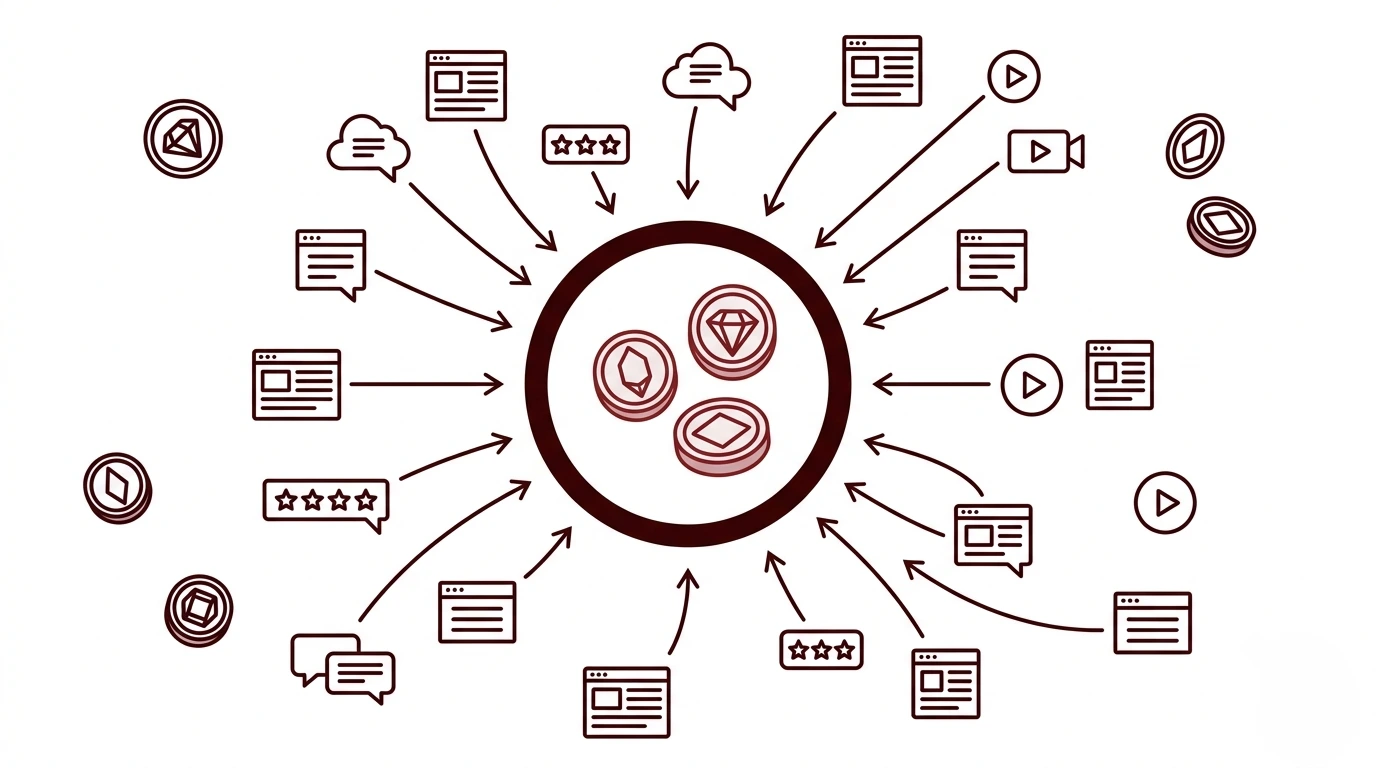
Everything we have seen so far happens on your site. Here is the uncomfortable chapter: half your AI visibility plays out elsewhere, on pages you do not control. AIs form their opinion of your brand by reading the whole web: comparisons, reviews, forums, videos.
Your site stays the foundation (it must contain everything: offers, proof, documentation); but distribution and reputation make the difference between a brand the AI knows and a brand it recommends.
Brand mentions: the number-one signal, ahead of backlinks
This is the study result that should redirect entire budgets. Across 75,000 brands analyzed, Ahrefs measures that web mentions are the factor most correlated with AI Overviews visibility (0.664), more than three times higher than backlinks (0.218).
The most-mentioned brands get up to 10 times more AI mentions than the next quartile. Twenty years of SEO taught us to chase the link; the AIs, for their part, count the times people talk about you.
And the mention pays even without a link. Only 28% of brand mentions by AIs include a link; in the Claude pipeline study, 83.7% of recommended brands are named in plain text. For an LLM, each page that ties your name to your topic reinforces the association in its "brain," link or not. The "no link, no interest" reflex belongs to another era.
The 3 tiers of mentions, and where to put the effort
Tier | Sources | Why it matters |
|---|---|---|
1. Third-party editorial | Industry media, review sites, listicles, comparisons, YouTube reviews, recognized niche blogs | These are the pages the AI already cites: in the Claude study, 59.8% of citations come from third-party lists and comparisons |
2. Communities | Reddit, Quora, industry forums | Authentic speech, massively cited AND baked into the training data |
3. Owned ecosystem | Your YouTube channel, LinkedIn, your podcast appearances, anything indexed under your name | Repeats the brand-topic association on high-authority domains, over time |
One more data point to aim right at tier 1: in third-party lists, position matters. The Claude pipeline study measures that a brand placed in positions 1 to 10 of a comparison is picked up in about 22% of cases, versus 7.6% beyond the tenth slot. Being "somewhere in the list" is not enough; aim for the top, or a shorter list.
Your off-site GEO action plan, in order
Target the pages the AI already cites. Go back to your comparison prompts: which third-party pages keep coming up in the answers? Every listicle where your competitors appear without you is an identified outreach target, with maximum return on effort since the page is already in the citation loop.
Do digital PR on your data, not your product. Journalists and creators do not cite brochures; they cite fresh numbers. Your customer survey, your benchmark, your anonymized usage statistics: that is what you send a media outlet with a real chance of a mention (and often a link as a bonus).
Invest in communities, respecting their rules. Reddit and Quora punish self-promotion: burned accounts, deleted posts, destroyed reputation. The method that works: answer questions in your field honestly, mention your solution only when it is THE relevant answer, disclose who you are. Timing matters too: AIs favor recent, active discussions; monitoring with alerts gets you into the first answers, not onto a dead thread. And if you doubt Reddit's weight: Google pays it 60 million dollars a year and OpenAI about 70 million to license its content, which directly feeds their answers.
Make YouTube your priority video worksite. Of all the factors Ahrefs measured across 75,000 brands, it is the signal most correlated with AI visibility (0.737), ahead of everything else. Transcripts make every sentence indexable, and the models train massively on YouTube. The "search winner" recipe rather than viral: aim for questions people search continuously; title = the exact query (save creativity for the thumbnail); a description that actually summarizes; timestamped chapters (the AI can cite the precise segment); auto-transcript corrected by hand; and say your keyword out loud in the video, the engines understand audio. Finally, look at which format already ranks on your query (tutorial, comparison, review) and make that format. A video is not a separate strategy: it is the same topic from your editorial plan, delivered in the format Perplexity and AI Mode prefer.
Occupy podcasts and interviews. Each appearance is one more indexed page tying your name, your expertise and your branded concepts together, on a third party's domain. It is also the ideal channel to repeat the name of your in-house framework.
And monitor your mentions the way you monitor your rankings: listicles get updated and brands drop off them, outdated information circulates. If an error concerns you, fix it first on your own site (your site is your official source), then ask the publisher for a correction.
💼 Need an SEO and GEO specialist? Whether to support your teams on a project or to join them, feel free to reach out to me on LinkedIn.
Do this now | Why | Effort |
|---|---|---|
List 10 listicles and comparisons in your category cited by the AIs (spot them via your test prompts), note who appears, and contact the 3 most accessible ones where you are missing | Third-party lists generate 59.8% of Claude's citations and feed the consensus everywhere: one well-placed inclusion weighs more than a month of content production | Medium |
Choose the proprietary data you can produce this quarter (customer survey, benchmark, usage stats) and write the one-page pitch for your industry media | Editorial mentions are earned with fresh numbers, not product press releases; it is the fuel of tier 1 | High |
Identify 3 community spaces where your customers ask questions, set alerts on your topics, and answer usefully twice a week | Reddit and Quora are massively cited and licensed to the AIs; authentic consistency builds a presence money cannot buy | Medium |
Plan your first "search winner" video: a frequent customer question, title = the query, chapters, hand-checked transcript | YouTube is the number-one AI-visibility signal (0.737 correlation): one well-built video works for you on Perplexity, AI Mode and in the training data | High |
Local and e-commerce GEO: the special cases
Two arenas follow specific rules that deserve their own playbook: local search, where AI visibility is brutally binary, and e-commerce, where the assistants now recommend products by name.
Local GEO: cited, or nonexistent
Ask an AI "best osteopath in downtown Austin": it answers with three or four names, and the conversation ends there. No map to scroll, no page two: either you are in the answer, or you do not exist. For a local business or practice, the stakes are existential, and the plan comes down to five worksites.
Your Google Business Profile is your AI ID card. It is the structured source the systems consult first. Hours, services, photos, attributes: everything must be accurate and up to date. Use the questions-and-answers section by answering in natural language, the way your customers speak ("do you offer Saturday appointments?"): you are literally feeding the material the AI will reuse.
Consistency everywhere, not just on Google. AIs cross several sources: Bing Places, directories, your site. Name, address, phone and hours must be strictly identical everywhere; every discrepancy (an old address lingering, two spellings of the name) weakens the system's trust, which then prefers to cite a competitor with clean data.
Detailed reviews rather than numerous ones. The AI reads the text of reviews to understand what you do well. "They found a leak two plumbers had missed, fixed within 24 hours" teaches it something citable; fifty "great, highly recommend" teach it nothing. Encourage your customers to tell the story of the problem you solved.
Hyperlocal content. Pages that answer the genuinely geo-located questions of your area ("how long does a building permit take in Austin?"), with links to relevant local players: that is what ties you to your territory in the engines' entities.
Local conversations and voice search. Neighborhood Facebook groups, Nextdoor and local forums produce the authentic speech AIs readily cite. And since a growing share of local queries happen by voice, content phrased as natural questions and answers matches exactly how people will look for you.
E-commerce: becoming recommendable by shopping assistants
ChatGPT and its competitors now recommend specific products, and the quality of their recommendations depends directly on the depth of the information they find. A product page built for the AI shows four traits:
Explicit use cases, not raw specs. "5000 mAh battery" tells no one anything; "lasts a weekend of hiking without a recharge" lets the AI match your product to the exact scenario the user describes. It is the scenario that triggers the recommendation, not the spec sheet.
A product FAQ that anticipates the real questions: the common comparisons ("what is the difference with model X?"), the edge cases ("is it suitable for professional use?"), maintenance, compatibility.
Honest comparisons, including when you lose. Admitting a competitor suits a given profile better strengthens your credibility with AI systems, which cross-reference sources and detect one-sided marketing. And testimonials that tell the story of a solved problem beat ten "excellent product."
Cross-channel consistency and structured product data. Price, availability and features identical on your site, the marketplaces and the merchant feeds; and complete product markup, because that is what the shopping agents will read to act. A price discrepancy between two channels is exactly the kind of contradiction that kills a recommendation.
Do this now | Why | Effort |
|---|---|---|
Local: audit your Google Business Profile (completeness, Q&A filled in), then check name-address-phone consistency across your 5 main presences (Google, Bing Places, industry directories, social) | Local AI visibility is binary, and data inconsistency is the number-one silent reason for being excluded from answers | Medium |
Local: set up a review request that steers toward the story ("what did we solve for you?") rather than the rating | The AI cites the content of reviews, not their count: a detailed review is a reusable recommendation argument | Low |
E-commerce: rewrite your number-one product page around use cases (who, for what, in which situation) with a FAQ and an honest comparison, and check its product markup | The AI recommends the product whose use scenario it understands; this is your pilot before rolling out across the catalog | Medium |
Measuring your AI visibility: KPIs, GA4 tracking and ROI
"You cannot manage what you do not measure" has never been truer: the classic SEO metrics (positions, traffic, CTR) simply do not see what happens inside AI answers. Here is the dashboard to set up, keeping in mind that AI visibility is a spectrum: cited with a link, mentioned without a link, or absent. Knowing that you are not in the conversation is information as valuable as the opposite.
The 5 GEO KPIs
Mention frequency: across your prompt library, how many answers name you. It is your headline metric, the GEO equivalent of average position.
AI share of voice: your share of mentions against the competitors named on the same prompts. This is the one that speaks to leadership: "the AI cites us in 12% of answers, versus 41% for X."
Citation quality: are you THE recommendation, one option among six, or a footnote? A mention at the top of the answer is not worth a peripheral one.
Sentiment: does the AI describe you positively, or repeat a reservation ("good tool but expensive")? To be checked across several platforms, each weighting its sources differently.
The authority of the sources that cite you: being cited via a reference media outlet strengthens the virtuous circle; appearing only via weak directories signals where to put the mention effort.
If you are evaluating an AI-visibility tracking tool (the market has dozens), four selection criteria: a score per platform and never merged (ChatGPT and Perplexity visibility have nothing to do with each other, an average hides them); the distinction between mentions alone and comparative mentions; analysis of the narrative themes tied to your brand; and detailed sentiment per source. A tool that gives only a single overall score will have you steering blind.
The 4 data sources, and how to wire them up
AI referral traffic in GA4. Create a custom channel group bundling chatgpt.com, perplexity, gemini.google.com, copilot.microsoft.com and claude.ai: you will see the volume, the landing pages and the behavior of these visitors. Know that it is a floor, not the reality: several AI apps do not pass the referrer, and part of this traffic disguises itself as "direct." The trends stay usable, the absolute values understate.
Bing Webmaster Tools, your official window on Copilot. It is the only place where an engine shows you first-hand AI citation data: the Copilot surface in BWT exposes how your pages feed its answers. Track your trends there the way you track Search Console for Google, and watch for changes: it is also your thermometer for the ChatGPT ecosystem, built on the same index.
Server logs: who reads you, and what. Distinguish the training bots (GPTBot, Google-Extended, CCBot) from the search bots (OAI-SearchBot, Claude-SearchBot). A page the search bots revisit in a loop is probably already an answer source; a strategic page no bot visits has an access or linking problem.
Declared attribution: the measure that sees the invisible. The typical AI journey escapes analytics: your prospect asks ChatGPT for advice, remembers your name, then types your URL three days later; GA4 files that under "direct." The counter costs one form line: "How did you hear about us?" with an AI assistant option, at sign-up, quote or first contact. It is regularly the source that reveals the AI already weighs more than anyone thought.
A warning signal to exploit in this data: the important page with zero AI traffic. If your flagship product page never gets a single AI-referred visit while other pages on the site do, that is a symptom: a technical access problem, commodity content, or a topic on which the AI has picked other sources. That is where the investigation should start.
ROI: little volume, a lot of intent
Let's talk numbers, without sugarcoating. By volume, AI referral traffic stays a small fraction of the total for most sites. Judged on volume alone, GEO looks anecdotal, and that is the most common analytical mistake among decision-makers.
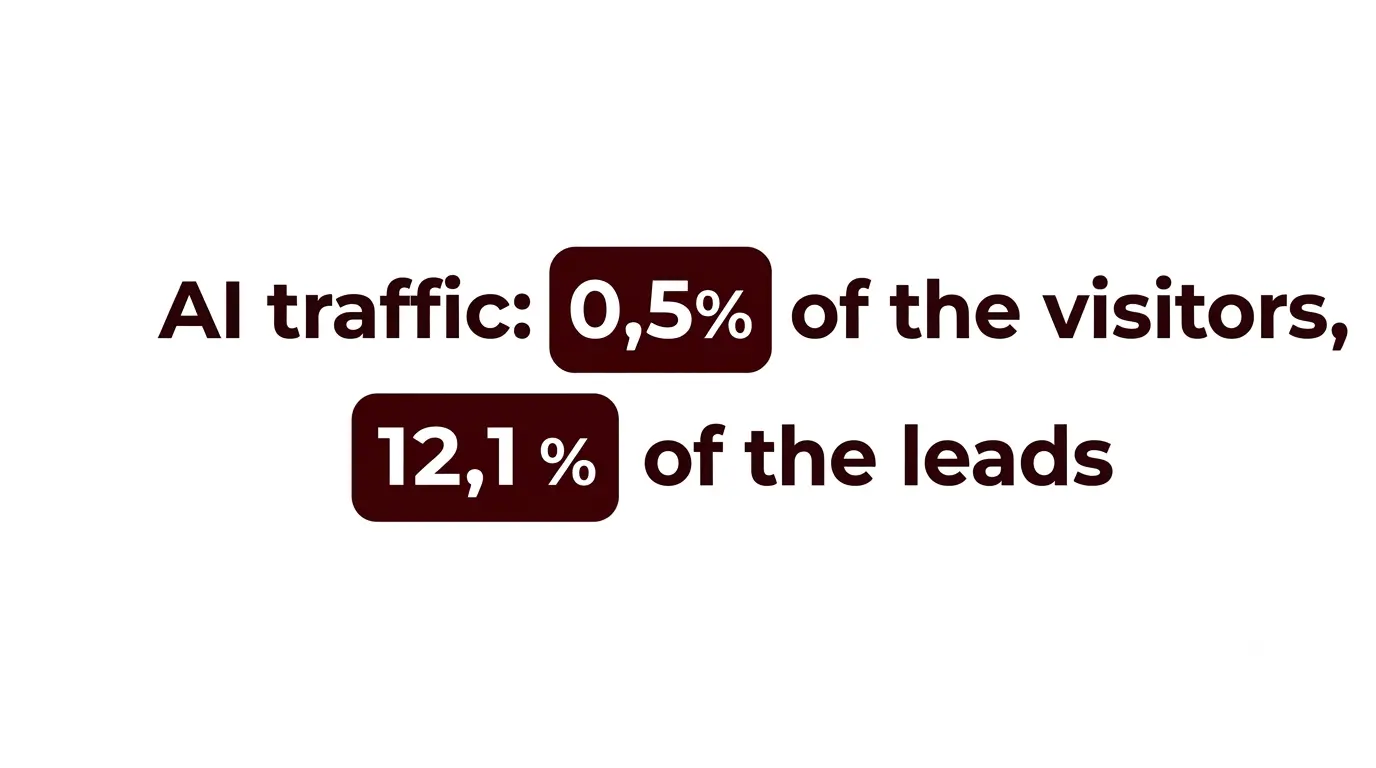
Because quality tells the opposite story: the visitor sent by an AI arrives pre-sold, the assistant has already explained why you are relevant. Ahrefs reports that visitors from AI search, 0.5% of its traffic, generated 12.1% of its sign-ups: a conversion roughly 23 times higher than organic. A single SaaS company's case, not to be generalized as-is (sector studies cite multiples from 2 to 27 depending on the industry), but the direction is constant everywhere: fewer clicks, far more intent per click.
Add the value nothing measures directly: each AI recommendation is a brand impression at the exact moment of choice. The user does not always click; they remember. Watch the growth of your branded searches as an indirect signal of that effect. And remember the cadence: monthly measurement of trends (never conclusions from a single test, citations change constantly), quarterly review. The KPIs themselves will evolve with the platforms: the measurement framework gets revised too.
🎯 What this changes for you. The full setup (GA4 channel, BWT account, attribution question, monthly prompt library) fits in half a day and costs zero in tooling. From there, you steer GEO with data, while your competitors debate it on gut feel.
Do this now | Why | Effort |
|---|---|---|
Create the AI channel group in GA4 (chatgpt.com, perplexity, gemini.google.com, copilot.microsoft.com, claude.ai) and annotate the setup date | Without a dedicated channel, AI traffic drowns in referral and direct: you will see neither its volume nor, above all, its conversion, which is its real argument | Low |
Add "How did you hear about us?" with an AI assistant option to your main form, and read the answers every month | The typical AI journey (advice, then delayed direct visit) is invisible in analytics; this question is often the only proof of AI's real weight in your sales | Low |
Open your monthly dashboard: the 5 KPIs on your prompt library, the GA4 and BWT trends, and the 3 actions for the month that follow | AI visibility fluctuates by design (45% of citations change every 2 days): only the monthly trend separates real progress from noise | Medium |
AI misinformation: protecting your brand
The last risk, and not the least: AIs can learn and repeat false information about your brand, with the confidence that defines them. Wrong prices, an invented founder, imaginary features: if third-party sources tell nonsense, some platforms will repeat it to your prospects.
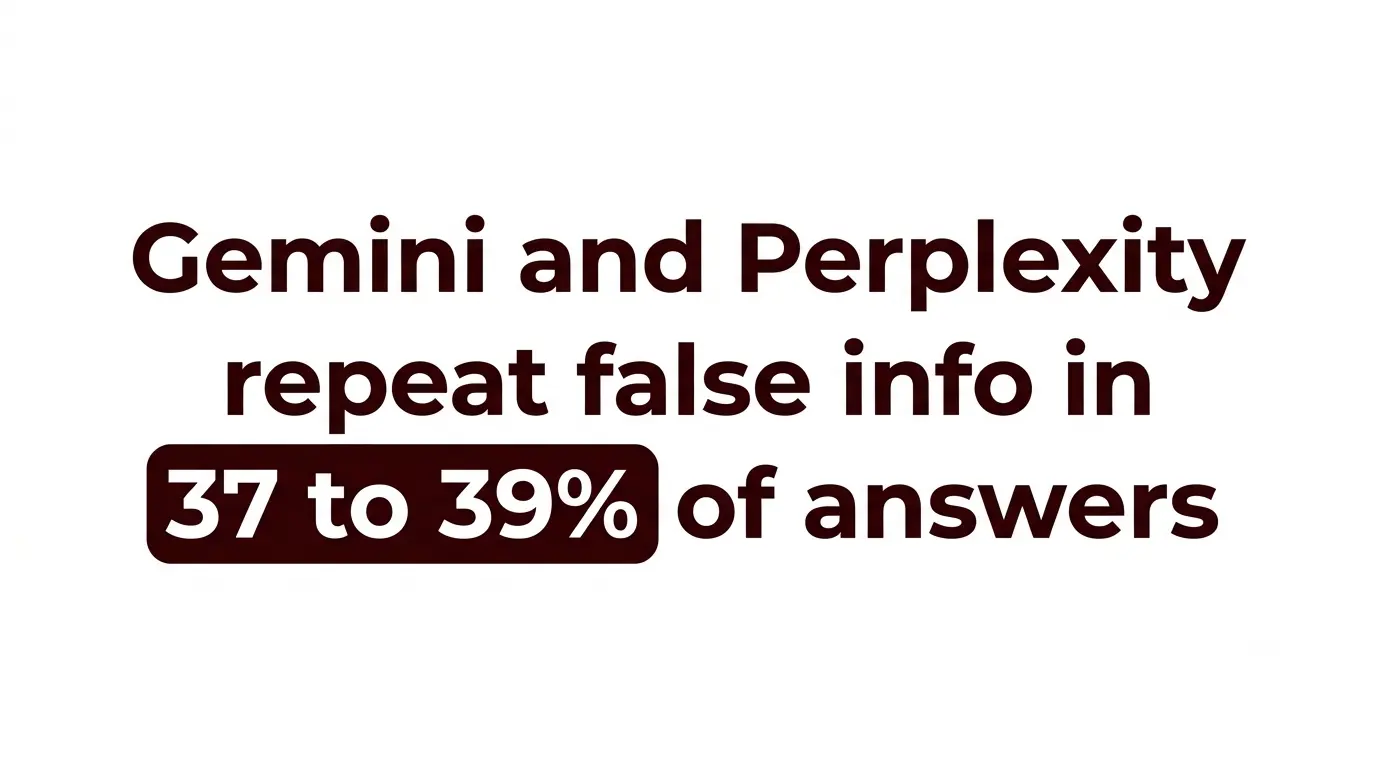
The risk is measured, and very uneven across platforms. In an Ahrefs experiment (December 2025), a researcher created a fictional brand from scratch, published contradictory information about it (a fake Medium article against an official FAQ), then asked 56 questions to eight platforms.
Result: Gemini and Perplexity repeated the misinformation in 37 to 39% of answers; ChatGPT stayed under 7% and cited the official FAQ in 84% of cases. The author's conclusion deserves framing: "in AI search, the most detailed story wins, even when it is false." The fake article was precise and circumstantial; it beat the official source everywhere the latter stayed vague.
Your defense is built before the incident, in four moves:
Publish a detailed official FAQ about your brand: who you are, what you do, your pricing or your model, what you do not do. It is the page the best systems will fetch to settle the matter.
Be specific everywhere: dates, numbers, names. Since detailed beats vague, your official communication must be the most specific source available about yourself.
Test monthly what the AIs say about your brand, on at least three platforms, with the same questions. Ten minutes that catch a drift before your prospects do.
When there is an error, fix it in order: your site first (reinforce the official page on the precise point), then the third-party sources spreading the error, with a documented correction request.
Do this now | Why | Effort |
|---|---|---|
Create or enrich your brand's official FAQ with the sensitive questions (pricing, model, team, scope), in precise and dated answers | Faced with contradictory sources, the best platforms rule in favor of the most detailed official source: this page is your insurance | Medium |
Install the monthly ritual: 5 questions about your brand asked to 3 platforms, answers archived in a table | Gemini and Perplexity repeat misinformation in nearly 4 answers out of 10 when it exists: better to catch it yourself than in a sales meeting | Low |
Conclusion: start now, before your competitors
If you keep only the essentials: your visibility no longer depends on your position on Google alone, but on your presence inside AI answers. That presence is built on three pillars, a healthy SEO and technical foundation, content that brings what the model does not already know, and mentions everywhere your market speaks, all measured in monthly trends.
The decisive advantage, today, is timing. The mechanisms evolve constantly, the studies refine every week, but one thing will not change: brands installed early in the AIs' consensus will be hard to dislodge. Three moves to start this week:
Diagnose: ask 5 of your customers' questions to ChatGPT, Google AI and Perplexity, and see who is recommended.
Open the doors: robots.txt and CDN audited, Bing Webmaster Tools account created, site: check on Brave.
Measure: an AI channel in GA4 and an attribution question, so every action has its before and after.
One last word, and it may be the most useful: this field moves too fast for a frozen article to stay true for long. That is why I update this guide every week: new studies, refreshed statistics, revised tactics, and I will list the changes at the top of the article at each update. Bookmark this page and come back to it: it will stay your up-to-date snapshot of what we really know about GEO.
And if you are looking for a specialist on the subject, to support your teams or to join them, reach out to me on LinkedIn.
FAQ
What is GEO, in one sentence?
GEO (generative engine optimization) is the set of techniques that get your brand cited and recommended inside the answers of generative AIs like ChatGPT, Google AI Overviews, Perplexity and Claude. Where SEO aims for a position in a list of results, GEO aims for a place inside the answer itself.
What is the difference between GEO, AEO and SEO?
SEO optimizes your ranking in the classic search results. GEO optimizes your presence in AI-generated answers. AEO (answer engine optimization) is the broadest term: it covers every direct-answer engine, featured snippets and voice assistants included. All three share the same foundation: a healthy site, quality content, real authority.
Is SEO dead now that AI has arrived?
No, quite the opposite: SEO has become the foundation of GEO. AIs draw from the indexes of the classic engines (Bing for ChatGPT, Brave for Claude, Google for AI Overviews): your SEO there determines your citable raw material. What is dead is steering by ranking alone, because a growing share of answers is given without a click.
How long does it take to see GEO results?
It depends on the lever. Some effects are near-immediate: a Brave indexing can make you citable by Claude in 24 hours, a hallucinated-404 redirect recovers traffic the same day. Building authority (mentions, consensus, clusters) is counted in months: expect an honest first review at 90 days, and judge on trends, never on a single test.
Is schema markup required to be cited by AI?
No. No study proves a direct effect of schema on AI citations, and Google explicitly states that structured data is not required for its generative search. Deploy clean markup as an SEO best practice (rich results, clarity), but be wary of anyone selling it to you as the magic GEO lever.
Does AI-sourced traffic actually convert?
Yes, clearly better than organic in most measured cases, because the assistant has already argued for you before the click: at Ahrefs, 0.5% of AI-sourced traffic produced 12.1% of sign-ups. The volume stays low and part of this traffic is invisible in analytics: measure it with a dedicated GA4 channel and a "how did you hear about us?" question.
How do I know if my site is in the AIs' training data?
Check your presence in Common Crawl, the open corpus most large models feed on: its public index (index.commoncrawl.org) lets you search your domain crawl by crawl. If you are missing, verify that your robots.txt and your CDN are not excluding CCBot, then work on your links and mentions: Common Crawl visits a domain more the more central it is in the web's graph.
Does GEO work for a small brand?
Yes, provided you pick your battles. In a category locked by a giant, play the niche: more precise prompts ("for a small business," "in the US," "without a subscription") where the consensus is still being built. In a contested category, the window is open: studies show an active challenger can settle into the pool of recommendations in 18 to 24 months. Small budgets even have an edge: proprietary data and community authenticity, the two highest-yielding levers, cannot be bought.