
Case study · Freight, logistics & forwarding
The SEO/GEO strategy that generated 7-figure organic revenue for a freight forwarder
DocShipper is an international freight forwarder and sourcing player operating across the United States, the United Kingdom, Europe and Asia. In two years, a stalled inbound pipeline became a B2B lead machine: +290% qualified inquiries, +51% conversion, and seven-figure organic revenue growth. Here is how, step by step.
Real case study. Business figures shown as relatives, technical data in absolute terms. Brand named with permission.
- 7 figures
- in organic revenue grown (USD)
- +290%
- qualified B2B leads (2 years)
- +51%
- visitor-to-lead conversion rate
- 22 sites
- multilingual, rebuilt and managed
In short
When I took over DocShipper's marketing, I replaced a publish-for-the-sake-of-it approach with a full system: clean technical foundations, content built on real search intent, sales pages optimized for conversion, brand authority earned through digital PR, then AI-automated content production and updates across the group's 22 sites.
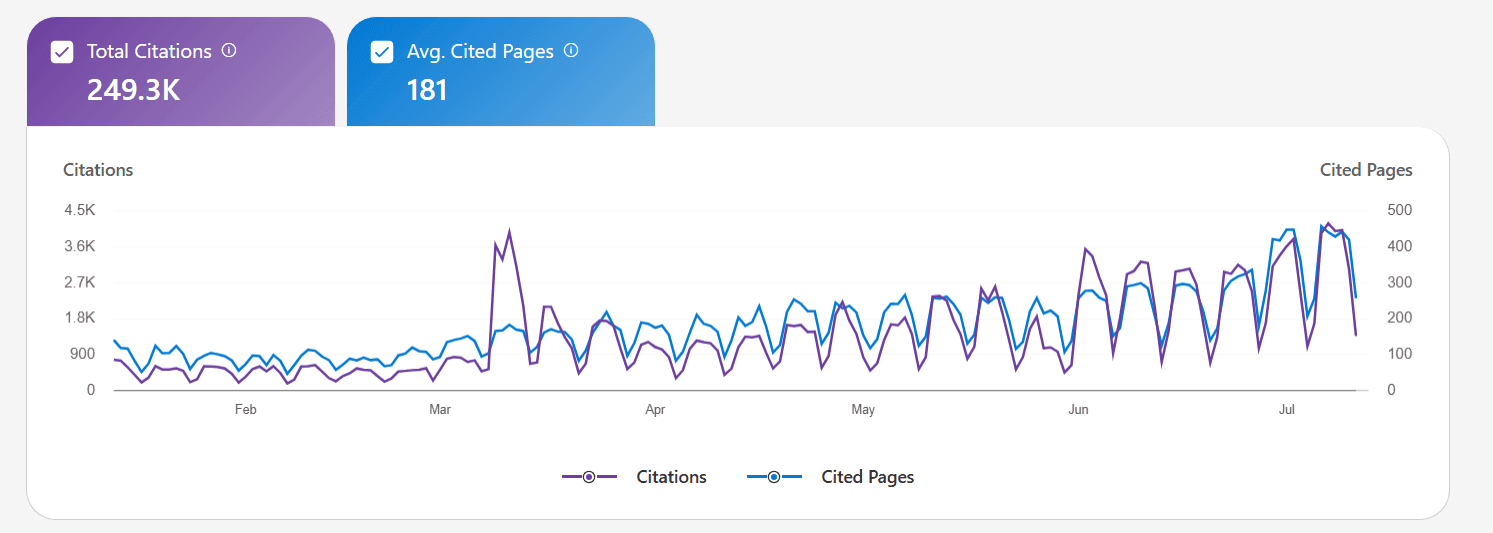
The result: seven-figure organic revenue growth, +290% qualified B2B leads and +51% conversion, all on a marketing budget under $5,000 a month. And that growth held through Google's core updates and the AI shift: +30% qualified leads and +400% AI-engine citations in Q1 2026 versus Q1 2025.
The mission at a glance
- Client
- DocShipper Group (forwarding + sourcing)
- Role
- SEO & Content Manager, then Marketing Manager
- Duration
- 4 years, in-house (since late 2022)
- Scope
- 22 multilingual sites, FR / EN / AR
- Markets
- France, US, UK, Europe, China, Vietnam, Thailand, Middle East
- Team
- Team of 4, up to 10 writers managed
- Marketing budget
- under $5,000 / month
- Stack
- Semrush, Screaming Frog, GA4, GSC, n8n, WordPress, Cloud Run, GPT & Claude
The client: an international forwarder in a saturated market
DocShipper Group brings international freight forwarding (sea, air, road, customs, consolidation), warehousing (3PL) and sourcing onto a single platform, from China to Europe, the Middle East and North America. Its customers are importers, e-commerce sellers and B2B shippers. A fiercely competitive import-export market, where every qualified quote request counts, and trust is earned on how technically accurate your content is.
- 7 offices
- Bangkok, Vietnam, Malaysia, France, China, Tunisia, Lebanon
- 6,100+
- active clients
- 9,200+
- logistics operations
- 22 sites
- multi-market, multilingual
The starting point: plenty of content, very few results
When I took over marketing, the real problem was not technical, it was commercial: lead growth was far below the group's ambitions. Once I opened the hood, the diagnosis was unambiguous.
- A 100%-SEO strategy delivering weak results, with no real content strategy: publishing for the sake of it, no keyword research, no clusters.
- Around twenty sites and thousands of pieces of content never updated, often copied or translated from competitors.
- Educational landing pages instead of pages built to convert.
- Weak link building and an underused brand authority.
- Silent technical debt: broken links, toxic links, faulty hreflang, cannibalization between subdomains.
- An overworked team, heads down in execution, with no time to test or improve.
All of it on a marketing budget that never exceeded $5,000 a month, and did not grow when I took the whole thing over. The constraint forced the right instincts: prioritize, automate, and only spend where it converts.
The strategy, in three acts
No silver bullet: first fix the foundations, then build a conversion machine, then run it at scale through automation.
- 01
Fix the foundations
A deep technical audit, link-debt repair, hreflang and cannibalization resolved, high-traffic pages re-optimized for conversion. Stop the bleeding before accelerating.
- 02
Build the conversion machine
Content strategy anchored in real search intent and buyer personas, sales pages rewritten, digital PR for authority, data-driven steering to keep only what works.
- 03
Scale with AI
Automated keyword research, internal linking, content updates and creation across all 22 sites, to produce better with little internal resource and free the team from execution.
Execution, pillar by pillar
Each lever, with its context, the action taken and the result.
The audit that surfaced hidden debt
Context
First month in the group, nobody had run a technical audit on a complex multi-subdomain architecture. That is where I started, before touching a single piece of content.
Action
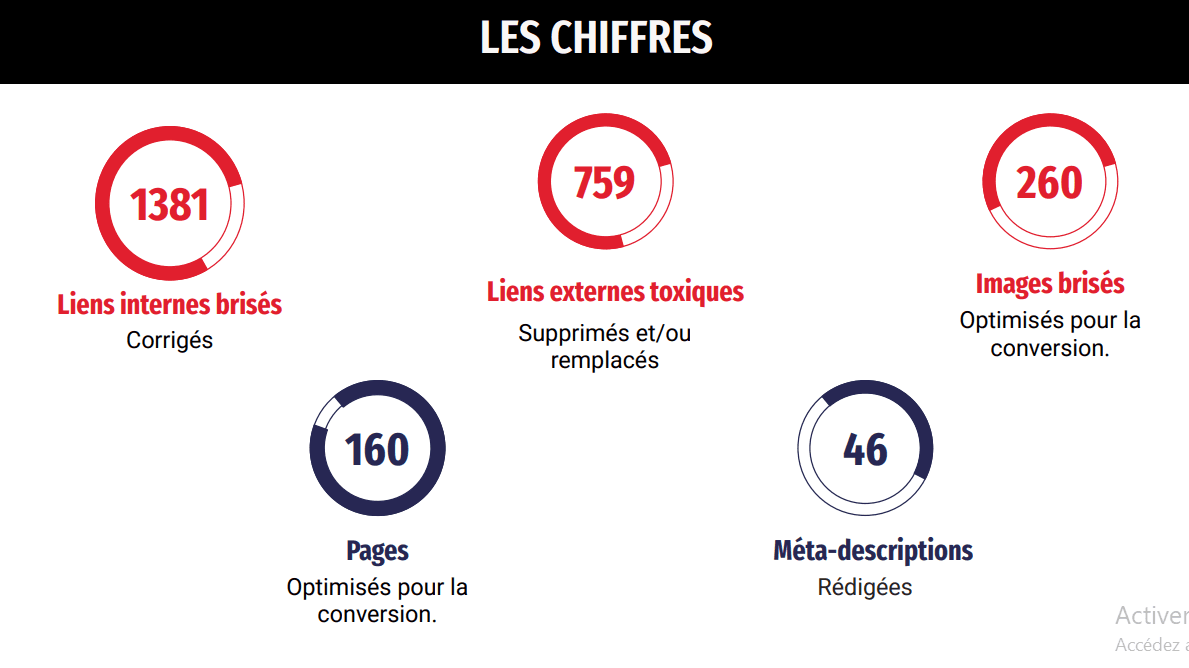
A cross audit with Semrush Site Audit, Screaming Frog and Search Console surfaced 1,381 broken internal links, 759 toxic outbound links, 306 broken images, faulty hreflang and cross-market cannibalization. I repaired the links, removed or replaced the toxic ones, wrote the missing metas, clarified market targeting and re-optimized 160 high-traffic pages for conversion.
Result
On siam-shipping.com, Site Health went from 78% to 88% and errors dropped from 1,404 to 39. The bleeding stopped, the technical foundation of the turnaround was laid. And that was just one audit among dozens over four years.
The end of publishing for the sake of it
Context
Thousands of pieces produced with no strategy, modeled on competitors, with no keyword research and no understanding of the customer.
Action
I rebuilt the strategy around a real understanding of customers (personas via interviews, CRM, scoring), audited and categorized every piece by intent and potential (quick win, update, rewrite, removal), and enforced real SEO fundamentals: keyword research, clusters, human expertise, editorial line.
Result
Content that finally answers what freight and sourcing buyers actually look for, aligned with the buying journey rather than with publishing volume.
Educational pages turned into sales pages
Context
Most landing pages explained a concept instead of selling a service: some traffic, maybe, but very few quote requests.
Action
Sales pages rewritten across every site with the right commercial messaging and keywords, roughly 30 landing pages per site and per language, adapted to market and region, with GTM and Analytics tracking to tell what truly converts.
Result
+51% visitor-to-lead conversion rate, measured across all sites over two years.


The Beirut office opening, picked up by the press
Context
The two French-Lebanese co-founders were opening a Beirut office in the middle of an economic crisis, with mass hiring.
Action
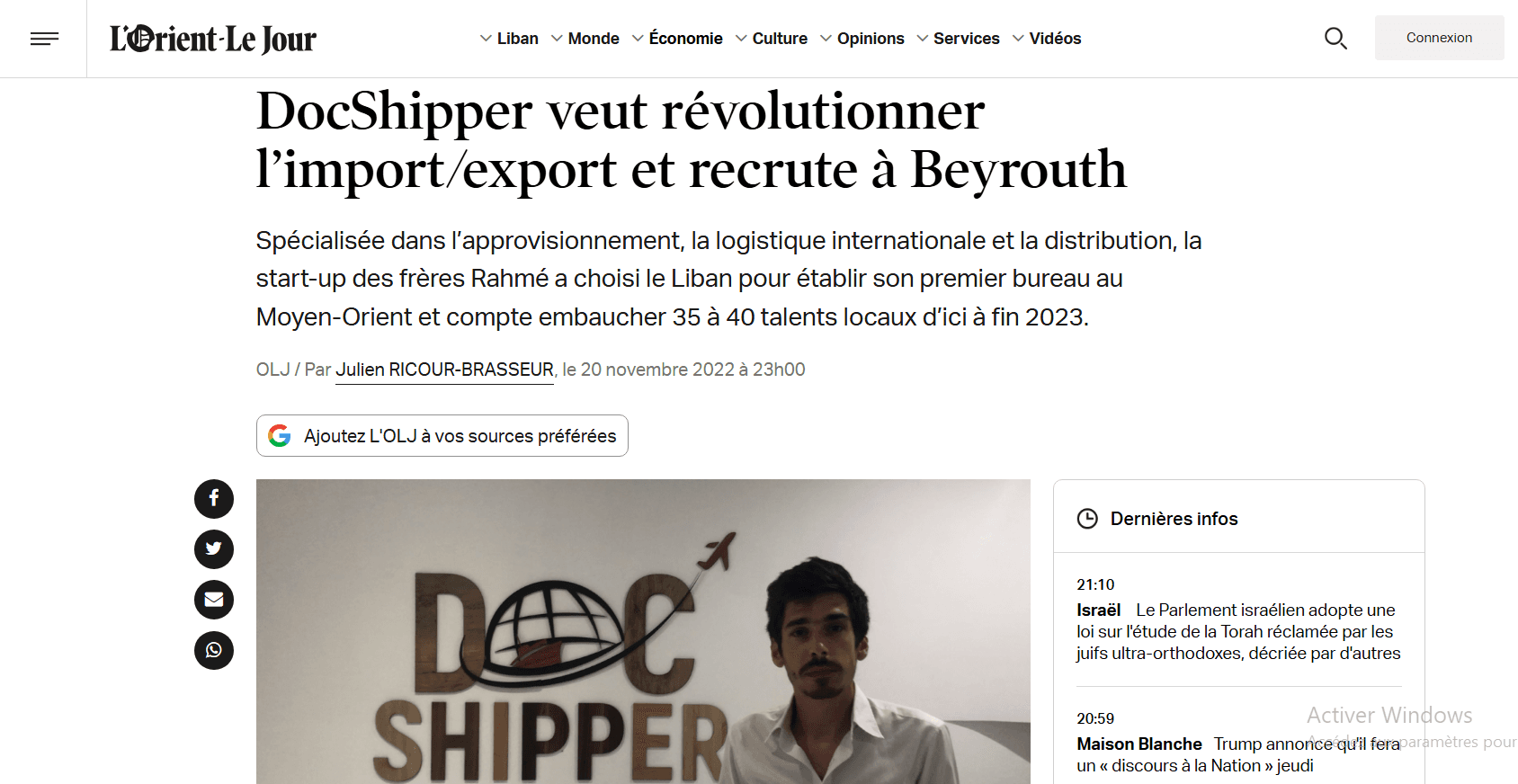
I built a digital PR campaign around a strong angle: a call to the Lebanese diaspora, two entrepreneurs investing in a country in crisis. Target: journalists who had covered Lebanon and the Middle East.
Result
Coverage in high-authority outlets, including L'Orient-Le Jour and Libnanews, plus around twenty other titles. Earned links and mentions, a lasting sales boost and a rise in the sites' authority score.
Repair the authority, then build it
Context
A damaged link profile (hundreds of toxic outbound links) and competitors better cited than us on the same topics.
Action
Cleaning up toxic links, inventorying existing links and mentions, analyzing backlink gaps against competitors, then tiered link building, guest posts, exchanges and articles designed to appeal to both journalists and industry media.
Result
Thousands of quality links earned over time, and a brand authority that feeds both Google rankings and citations in AI engines.
Local search, across six countries
Context
Physical offices in Tunis, Bangkok, Paris, Beirut, Chengdu and Hong Kong, but an unused local presence.
Action
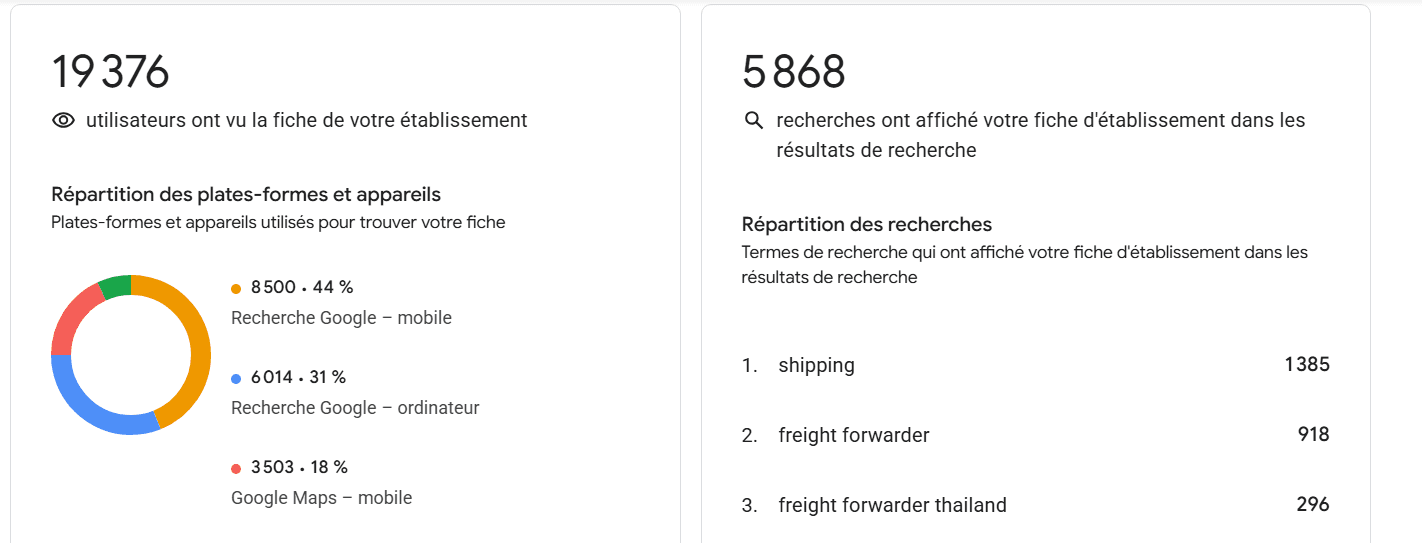
Took over the group's Google Business Profile accounts for multi-country local search.
Result
Consistent local visibility across every location, complementing international SEO.
A content engine built from scratch
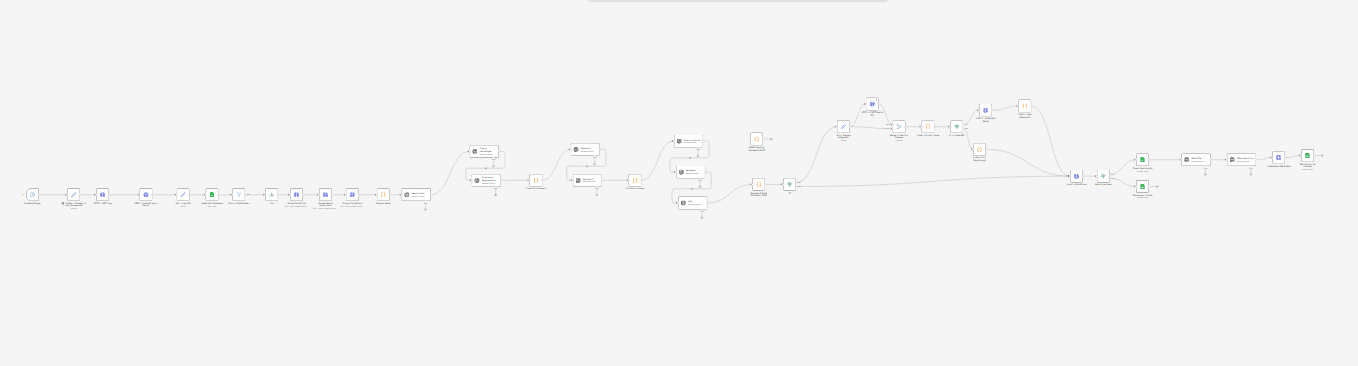
What truly sets this work apart from classic SEO: I built, entirely from scratch, a system that updates, rewrites and creates content across the group's 22 sites with almost no manual step. One row in a Google Sheet goes in; a sourced, written and published article comes out. What a competitor cannot easily replicate: updating hundreds of multilingual articles in a single day, each grounded in official sources, at a quality bar manual teams cannot sustain over time.
End-to-end flow
- 01
Google Sheet
Single source of truth. One row = one task. A scoring model decides each page's fate: rewrite, major or minor update, quick win, removal, cannibalization.
- 02
Scraping (Cloud Run)
A Python micro-service analyzes competitors (filtered Google Custom Search) and the existing article, extracting clean content and a link and image inventory.
- 03
Drafting (GPT)
Search-intent analysis, a constrained H1/H2/H3 structure, segment-by-segment writing against a strict in-house editorial standard.
- 04
Official sources
Every claim is resolved to an official source (a whitelist of about a hundred authorities: WTO, IATA, Incoterms, customs) before any link is injected.
- 05
Quality control
An independent QA node blocks publishing if the article fails the criteria. No weak content ever goes live automatically.
- 06
Publishing (WordPress)
A custom WordPress REST plugin publishes the article and its SEO metadata, then automated internal linking injects the relevant links.
Two human gates protect quality: the brief is approved before writing, the draft is reviewed before going live. AI executes, humans judge.
The bet: going all-in on automation
The riskiest decision was to shift to automation when writing and updating had always been done by hand. The fear was real: losing quality. Thanks to the groundwork laid upfront (editorial standards, briefs, quality control), the opposite happened: more consistent quality, and a team freed from repetitive execution.
That reclaimed time went back into what actually matters: testing new strategies, stepping back, improving. I encouraged this automation culture with every team member. The bet was risky, and it paid off handsomely.
SEO and GEO growth that held through Google and AI
My proudest result is not a spike, it is growth that lasts. Leads kept climbing through Google's core updates, then through the generative-AI shift. Where many sites watched their educational traffic collapse with ChatGPT and AI Overviews, DocShipper gained a new layer of visibility: citations in AI answer engines.
- +30%
- qualified leads, Q1 2026 vs Q1 2025
- +400%
- AI-engine citations, Q1 2026 vs Q1 2025
This second layer of visibility is not a Google ranking: it is citation by AI engines, earned through a dedicated GEO and AEO (answer engine optimization) strategy (citable content, extractable answers, structured data, brand authority). Proof that healthy SEO foundations and content built to be cited hold up against algorithm changes as much as against a change of era.
The mission, over time
Late 2022
SEO & Content Manager
Joined the group, ran the first deep technical audit, managed content across 11 sites and led a digital PR campaign for the Beirut opening.
Mid-2023
Promoted to Marketing Manager
Full ownership of marketing. A deep strategic overhaul, revenue-focused and data-driven.
2023 → 2024
The turnaround
+290% qualified B2B leads, +51% conversion and seven-figure organic revenue growth. All 22 sites rebuilt and migrated with no ranking loss.
2025 → 2026
Automation & the AI era
Shift to content automation and a GEO strategy. Growth continues: +30% leads and +400% AI citations in Q1 2026 vs Q1 2025.
What this mission proves
Beyond DocShipper, principles that transfer to any freight, logistics or sourcing business.
Foundations before acceleration
Fixing technical debt and clarifying intent before producing avoids pouring content into a leaky bucket.
A tight budget is an ally
Under $5,000 a month, you are forced to prioritize what converts and automate the rest. That is what makes growth profitable.
SEO is the foundation of GEO
Structured, sourced, citable content serves Google and AI engines at once. Resilience comes from that, not from a trick.
AI executes, humans judge
Automation does not replace expertise: it multiplies it, as long as you keep human gates on quality.
Frequently asked questions
How do you achieve seven-figure revenue growth in logistics?+
By stopping publishing for the sake of it. At DocShipper, growth came from a sequence: first clean up the technical debt, then rebuild content around real search intent and turn educational pages into conversion pages, then work on authority through digital PR, and finally automate production across all sites. SEO becomes a revenue lever, not vanity traffic.
Does SEO still work for a freight forwarder in 2026, with AI?+
Yes, if you work two layers. SEO makes you visible on Google; GEO makes you citable by ChatGPT, Perplexity and AI Overviews. At DocShipper, lead growth held through the core updates and the AI shift, with +400% AI-engine citations in Q1 2026 versus Q1 2025. Generic educational traffic collapses, but conversion pages and AI visibility take over.
How do you produce content across 22 sites without sacrificing quality?+
With a system, not headcount. I built an automation pipeline (scraping, AI drafting, grounding in official sources, blocking QA, publishing) that updates and creates content across all 22 sites, with two human gates: the brief approved before writing, the draft reviewed before publishing. Quality improved, it did not drop.
How do you do GEO as a logistics company?+
By making your content citable by AI: extractable, self-contained answers at the top of the page, structured data, full coverage of your customers' sub-questions (inspired by how AI engines fan out queries), and brand authority built through citations and mentions. The base stays a healthy technical and editorial SEO: that is what makes GEO possible.
How long before the first results?+
Technical and conversion quick wins show within weeks to a few months (fixing a link debt or re-optimizing a high-traffic page pays fast). Deep growth builds over quarters: at DocShipper the turnaround played out over about two years, but above all it lasted beyond that.
How is logistics SEO different from generalist SEO?+
In such a technical field, content quality depends on understanding the trade: Incoterms, corridors, customs clearance, consolidation, sourcing. A generalist takes months to ramp up and produces content your expert clients spot as approximate. Four years inside an international forwarder gave me that field knowledge, and the execution speed that comes with it.
How do logistics companies get B2B leads with SEO?+
By targeting commercial-intent queries (freight forwarder, customs clearance, sourcing, specific lanes) instead of educational traffic, turning service pages into conversion pages optimized for quote requests, and backing it with authority (link building, digital PR). At DocShipper, that shift produced +290% qualified B2B leads in two years.
How do you run international SEO across multiple sites and markets?+
By clarifying market targeting (correct hreflang, ending cannibalization between domains), adapting content to each language and region rather than translating word for word, and industrializing production. I ran 22 multilingual sites this way (France, US, UK, China, Vietnam, Thailand, Middle East) with no ranking loss during migrations.
How do you get a freight forwarder cited by ChatGPT or Perplexity?+
By making your answers extractable (1 to 3 self-contained sentences at the top of the page), structuring your data (schema), covering your customers' real sub-questions, and building brand authority through citations and mentions. These GEO and AEO signals grew DocShipper's AI citations by +400% in Q1 2026 versus Q1 2025.
Go further
In freight, logistics or sourcing, and after the same results?
Let's talk about your visibility
Easiest path: 30 minutes on a call, or a direct message. I will tell you honestly what is achievable in your market.